According to the U.S. Small Business Administration, many owners choose states like Delaware for business-friendly laws. A study by Harvard Law shows how certain states attract entrepreneurs because of simpler LLC rules and investor trust.
You can still run your business from home or online, even if you have a Nevada LLC. Just follow that state’s filing rules and appoint a registered agent there. With the right setup, you stay compliant and gain extra benefits, it’s a smart, strategic step.
Can I Register an LLC in a New State If I Don’t Live There?
1: Tax & Legal Flexibility
Yes, you can set up an LLC in a different state, even if you live elsewhere. Over 60% of e-commerce startups register in states like Wyoming or Nevada to avoid income tax and enjoy low renewal fees. These states welcome non-residents with pro-business rules.
According to the Wyoming Secretary of State, you only need a registered agent with a local address to stay compliant. A study by the Tax Foundation highlights Wyoming’s consistent ranking as the #1 state for business-friendly tax policies.
You can run everything remotely and stay legally sound. Just make sure to track where your revenue comes from, that decides if you also need to file as a foreign LLC in your home state.
2: Privacy & Asset Protection
Yes, forming an LLC in a new state is fully allowed. Many choose Delaware for its strong privacy laws. Your name doesn’t appear in public databases, and its legal system is highly business-focused. That’s why over 66% of Fortune 500 companies are based there.
Delaware Division of Corporations notes that you can file without ever stepping into the state. A white paper by Cornell Law School praises Delaware’s Chancery Court for resolving business disputes faster and with more expertise than most courts.
If protecting your identity or assets matters, this route makes total sense. With a reliable virtual office provider, you stay discreet, compliant, and ready for growth, wherever you live.
3: Startup Strategy & Cost Efficiency
You’re free to register your LLC in a different state. Let’s say you’re launching a tech startup; choosing a state like New Mexico might slash your yearly costs. It offers low filing fees, no annual reports, and optional member anonymity.
As per Nolo, New Mexico requires no names listed in the public database, and ongoing compliance costs are among the lowest in the country. A case study from Harvard Business Review shows this can help early-stage businesses stay lean and focused.
Use this flexibility to your advantage. Forming in another state gives your startup breathing room, less paperwork, fewer fees, and more time to build something real.
Why Some Entrepreneurs Choose a Foreign LLC Setup
Many entrepreneurs form their LLC in a state different from where they operate. Delaware, for instance, is home to over 1.8 million business entities. Choosing a foreign LLC helps you unlock tax perks and business-friendly rules without needing to relocate.
According to the Franchise Tax Board, doing business across state lines requires foreign qualification. A checklist from Business Rocket highlights key benefits:
- Fewer state-level taxes in some jurisdictions
- Faster, simpler LLC formation
- Access to investor-friendly laws
You can form your LLC where the laws work in your favor. Just remember to maintain a registered agent and follow each state’s rules. It’s a smart, flexible way to grow—on your own terms.
What Is the Difference Between a Domestic LLC and a Foreign LLC?
Let’s make it crystal clear about the domastic and a foreign llc. A domestic LLC is when you want to form your llc in the state where you live or run your business, perfect for keeping things local and simple.
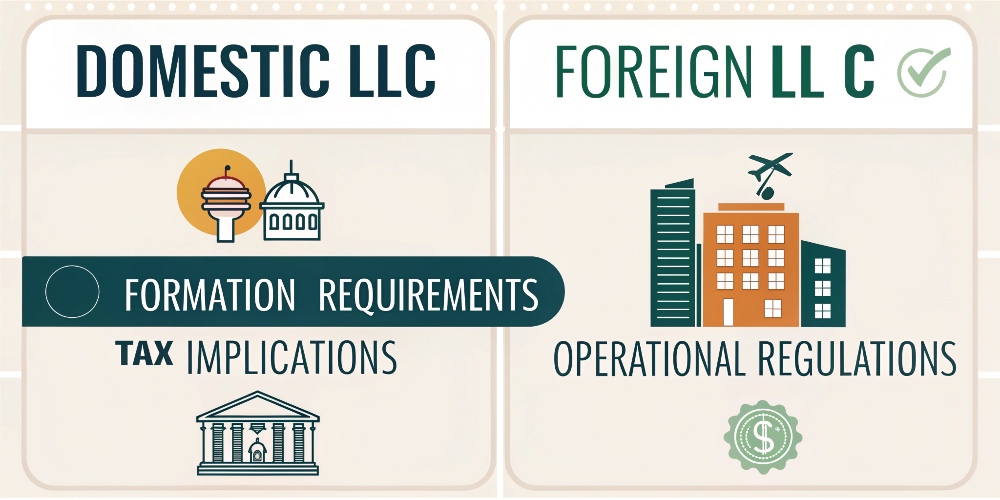
A foreign LLC, though, is set up in one state but does business in a new state, think forming in Delaware but working in Florida. You’ll need to file a foreign llc registration to stay legit in those extra states.
This guide breaks down the differences, from setup to costs, to help you pick the right path for your business formation!
Formation State
- Domestic LLC: You form your LLC in the state where your business operates, usually your home state, like filing with the New Mexico Secretary of State.
- Foreign LLC: Formed in one state (e.g., Delaware) but active in llc in another state, following that popular state’s rules.
Registration
- Domestic LLC: Just file Articles of Organization in your home state for an easy llc formation process.
- Foreign LLC: You must llc registered as a foreign entity in states where you conduct business, like with the Florida Department of State.
Address Considerations
- Domestic LLC: You can use your home address in the state, but it’s public, which state may affect LLC address privacy. Great for small biz owners employed in the state.
- Foreign LLC: Need a local business address for LLC in llc in those states or a virtual address to comply.
Compliance
- Domestic LLC: Simpler—just follow your state’s state regulations and filings.
- Foreign LLC: Trickier, meeting llc in each state’s laws for both formation and foreign states.
Costs
- Domestic LLC: Cheaper, with only your home state’s fees (e.g., Nevada’s $75).
- Foreign LLC: Costs more with register in multiple states fees (e.g., Florida’s $125) plus formation costs.
Tax Implications
- Domestic LLC: Pay taxes in your home state, with benefits of an llc like simpler filings.
- Foreign LLC: You llc also might owe taxes in multiple states, but Nevada or Wyoming can cut personal state income tax.
Use Case
- Domestic LLC: Best if you operate in one state, keeping it local.
- Foreign LLC: Ideal for expanding from one state to another, despite disadvantages of forming an llc like extra compliance.
Privacy
- Domestic LLC: Using your home address offers less privacy, your info is public.
- Foreign LLC: You can use a registered agent or virtual address to enhance privacy.
Do I Need to Register My LLC in Multiple States?
Yes. If you run your LLC in more than one state, you’ll likely need to register as a foreign LLC in each one. It doesn’t matter where the LLC is formed; what matters is where you show up. Team, income, office space, that counts.
Each state plays by its own rules. No universal checklist. But if you’re handling clients, hiring, or setting up shop outside your LLC’s home base, you follow that state’s process. Say you’re forming an LLC in Delaware, great move for privacy. But running the show in L.A., you register in California, too. Simple math.
Real-Life Example:
A small tech startup launched in New York but chose Delaware to form the LLC, it’s investor-friendly and offers strong privacy. Since the team worked in New York, they had to register as a foreign LLC there too. It gave them the best of both states: legal compliance and business perks.
Best State To Start LLC in 2025
Not every state treats LLCs the same. Some offer better tax breaks. Others make privacy a priority. A few do both. If you’re planning to start an LLC, where you form it can shape your costs, compliance, and growth down the line.
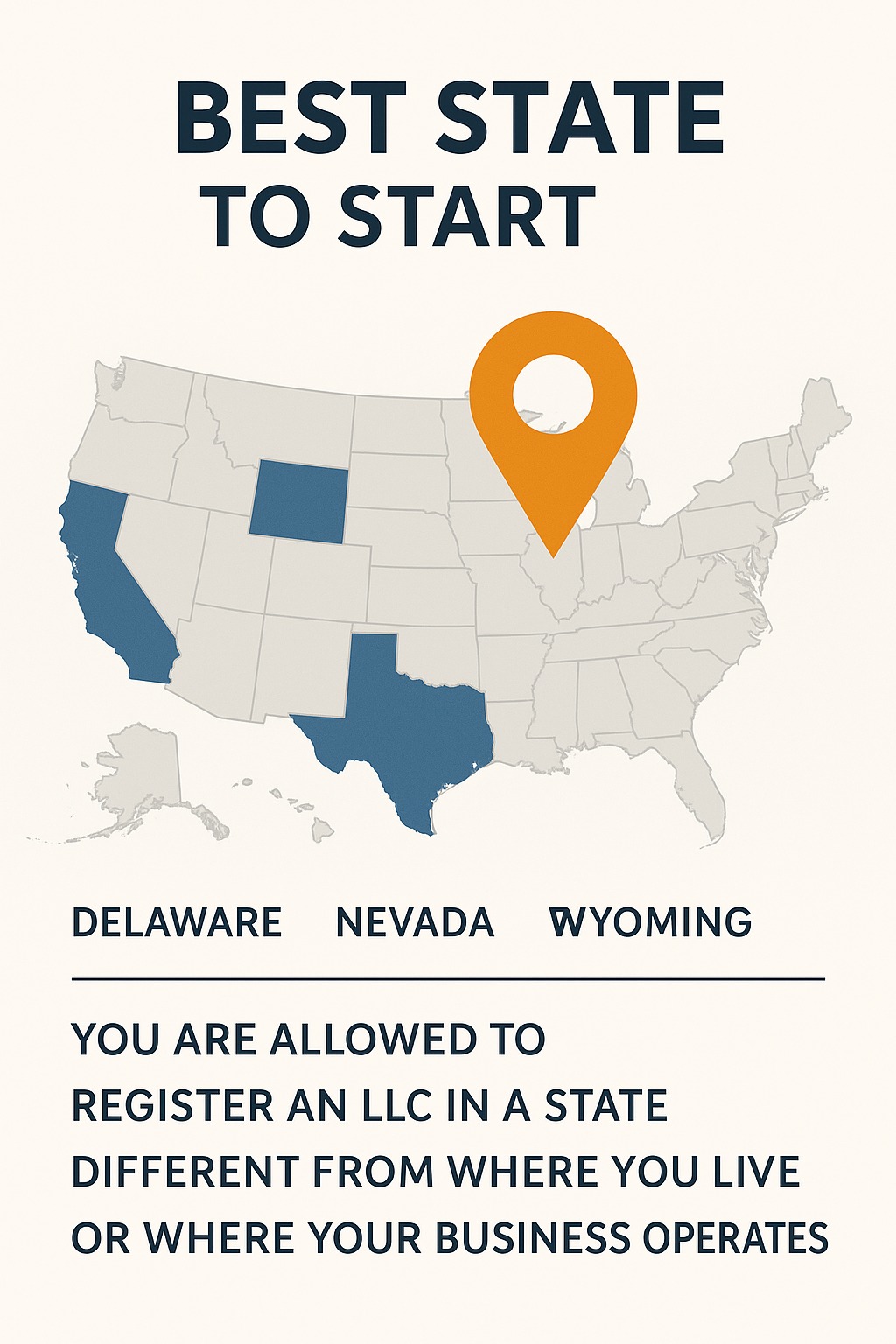
Here’s a quick breakdown of top states and what they’re really good for—so you can pick what works best for you.
| State | Tax & Filing Perks | Privacy & Compliance | Best For |
|---|---|---|---|
| Nevada | No state income tax, $75 filing fee | Strong LLC member privacy | Cheapest start, privacy seekers |
| Wyoming | No personal income tax, $100 fee | Top-tier privacy for owners | Rentals, low-cost setup |
| Delaware | No tax on out-of-state income, investor-friendly laws | No public disclosure of members | Scalable startups, investor backing |
| Texas | No state income tax, $300 formation | Simple and transparent compliance | Local businesses in Texas |
| Florida | $125 filing fee, no minimum capital requirement | Supports multi-member LLCs easily | Rental property owners, general business |
| South Dakota | No income tax, $150 filing fee | Privacy-friendly, light reporting | Cost-cutters and remote teams |
| Alaska | No state income tax, $200 filing fee | Allows flexibility for out-of-state business | Privacy + remote businesses |
| Montana | No sales tax, $70 fee | Home address allowed (check legal zoning) | Local rentals, simple filing |
| New Mexico | $50 fee, no annual reports | Owner info stays private | Ultra low-cost LLC, privacy-sensitive entrepreneurs |
| Utah | $70 fee, low ongoing maintenance | Easy multi-state compliance | Local businesses, low-hassle setup |
How to Form an LLC in Any Other State
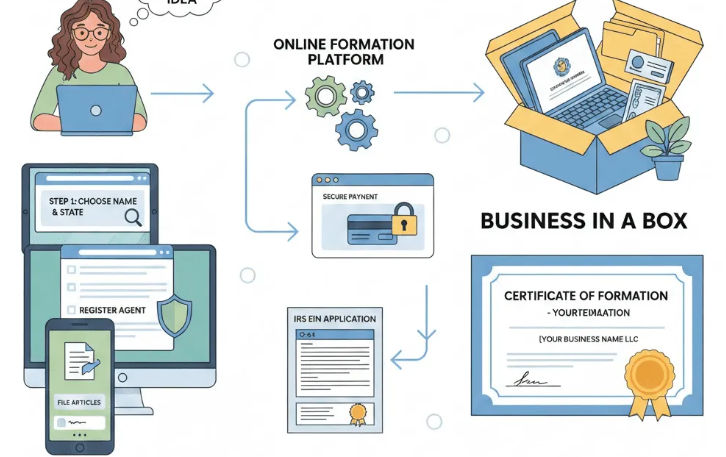
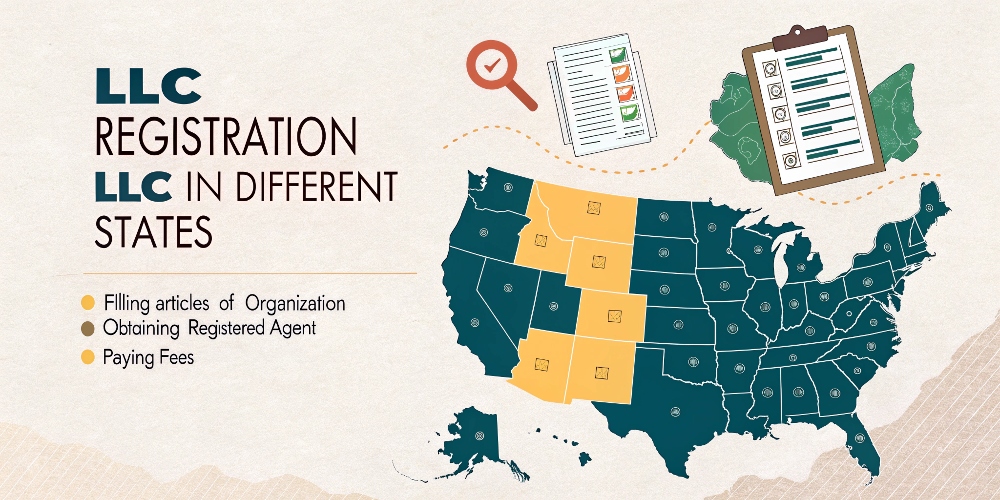
Forming an LLC outside your home state? It’s doable, and often strategic. Whether you’re chasing tax perks, privacy, or flexibility, here’s how to form an LLC out-of-state while staying compliant where you actually do business
Pick the State to Form Your LLC
Decide which state to form your LLC in based on business goals, state laws, and benefits like privacy or tax savings. Nevada or Delaware offer privacy protection for LLC owners, but your state where you reside works for simplicity.Appoint a Registered Agent
Every LLC in the state needs a registered agent with a physical address in that state where the LLC is being formed.File Articles of Organization
Submit the LLC filing documents (Articles of Organization) to the state’s Secretary of State and pay the state filing fee. This sets up your LLC in the state—try a cheapest state to start an LLC like New Mexico ($50).Get an EIN from the IRS
Apply for an Employer Identification Number (EIN) to open a bank account and file taxes. It’s a free, fast step from the Internal Revenue Service (IRS) for your business in the state.File Foreign LLC Registration (If Needed)
If you’ll do business in the state where you reside, file as a foreign LLC there to stay compliant. This keeps your LLC out of state legit per LLC laws by state, like forming in Wyoming but working elsewhere.
What to Know About Franchise Tax and State Income Tax
Franchise tax is a fee some states charge for the privilege of doing business as an LLC in the state, often based on revenue or a flat rate.
State income tax is what your LLC members may pay state on profits, but not every state to form an llc has it. These taxes hit whether you’re a known as a domestic llc or an llc as a foreign llc, and they vary by state.
Here’s a quick table to show how this plays out in key states for your business formation!
State | Franchise Tax | State Income Tax | Best For |
|---|---|---|---|
Texas | Franchise tax (0.75% of revenue or $1M) | No personal state income tax | LLC in their home state with no income tax |
California | Minimum $800 LLC annual fees | Income tax (1-13.3%) for LLC in one state | Businesses in a specific state with activity |
Nevada | No franchise tax, $150 annual fee | No state with no personal state income tax | Cheapest state to start an LLC, tax savings |
Wyoming | No franchise tax, $60 annual fee | No state income tax | Best state to start for low LLC tax obligations by state |
Delaware | $300 annual franchise tax | No income tax for company as a foreign llc | LLC in another state for growth |
Note:
State-specific taxes depend on the state where your LLC is registered. Check State Tax Agencies like California’s Franchise Tax Board or the IRS for details.
Do I Need to Appoint a Registered Agent in Each State?
es, you do. Every state where your LLC is registered requires a registered agent with a physical address. Nearly all 50 states follow this rule. If you register in multiple states, you’ll need an agent in each to handle legal notices and state mail.
According to Harbor Compliance, this keeps your LLC in good standing with state agencies. Bussiness Rocket Registered Agent Service also highlights how this helps avoid missed deadlines or penalties. It’s a small step that supports smooth operations across states.
You want to form an LLC in New Mexico or any other state? Easy, just make sure the agent for service of process is local.
Tip: Use a national provider so you stay compliant while expanding from one state to another. Keeps the LLC formation process simple.
How Does LLC Formation Work Outside Your Home State?
Over 55% of online business owners choose to register their LLC outside their home state. But forming an LLC in a different state still means you’ll need to file a foreign LLC registration in states where you operate. Some states require extra filings, which can mean added paperwork but also greater flexibility.
According to Nolo and the U.S. Small Business Administration:
- Forming out-of-state may offer lower fees or better legal protections
- You may need a registered agent and local address in the chosen state
- You’ll likely have to file taxes in both states if you operate in more than one
Think ahead. If your LLC also does business in other states, make sure you’re ready to follow their state regulations. Forming out-of-state works—but only when it fits your growth plans.
What Are the Benefits and Risks of Forming an Out-of-State LLC?
Some states offer a big break. Wyoming and Delaware rank high as the best state to form an LLC, low fees, solid privacy laws. Over 70% of Fortune 500 companies are registered in Delaware. You can register an LLC in any state, even if you live elsewhere.
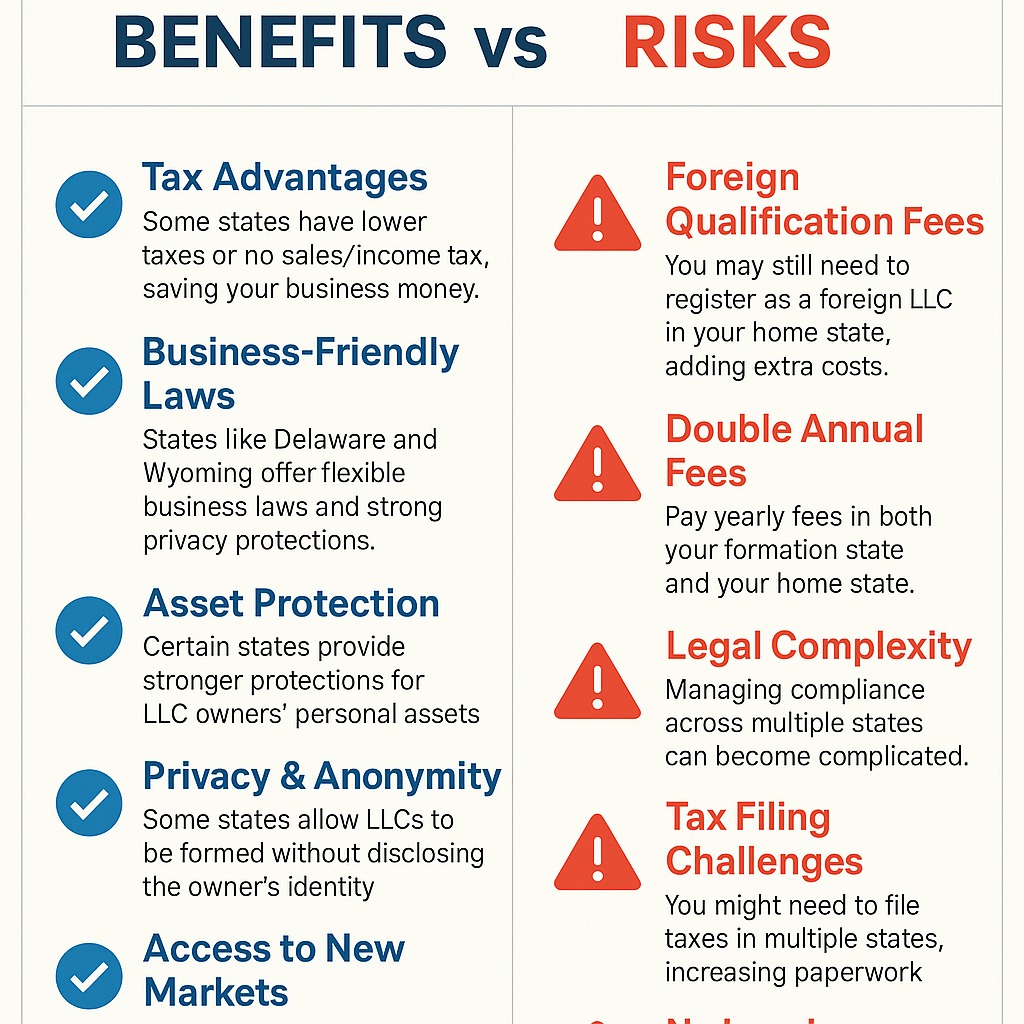
A study from Harvard Law Review shows that many choose states with less red tape to reduce hassle. According to Nolo, if you form an LLC in a different state, you might still need to register your LLC in states where you work or live. This keeps your business in good standing.
Benefits of Forming an Out-of-State LLC:
- Lower state taxes in places like Wyoming or Nevada
- More privacy and asset protection in states with strong laws
- Fewer regulations for remote or online businesses
Risks of Forming an Out-of-State LLC:
- May need to register your LLC again as a foreign entity
- Possible double filing fees and added paperwork
- Could face issues in states where you conduct business without compliance
With the right planning, forming an out-of-state LLC can give you more freedom, fewer headaches, and long-term gains.
FAQs
What’s the best state to form an LLC if I want strong privacy and low taxes?
Nevada and Wyoming are top picks for best state to form with strong LLC address privacy and no personal state income tax. Both state regulations favor benefits of an llc like tax savings.
Can I register my LLC in a different state than where I live or work?
Yes, you can I register LLC in different state than where you live or work.
Forming an LLC in a popular state like Delaware is common for tax or privacy perks. You’ll need a business address for LLC and a registered agent in that state.
Do I still need to register as a foreign LLC if I form an LLC outside my home state?
Yes, you must file a foreign llc registration in states where you conduct business.
If you form in Delaware but operate in Florida, register with the Florida Department of State. This ensures your llc registered complies with llc in those states. It’s key for multi-state operations.
Is it better to form an LLC in your home state or in a popular state like Wyoming or Delaware?
It depends on your business goals and where you operate.
Your home state is simpler for an llc in their home state, avoiding extra filings.
What are the benefits of an LLC formed in a state with no income tax?
Benefits of forming an llc in states like Nevada or Wyoming include no personal state income tax. This saves money for LLC members and simplifies filings. You still pay state taxes in llc in each state where you operate.
How do I set up an LLC outside my home state and stay compliant in both places?
Form your LLC in a state like Delaware, then file a foreign llc registration in your home state. Use a registered agent for a business address for LLC in the formation state. Comply with state regulations in both states for filings and taxes.
Can I form an LLC in New Mexico even if I’m not living there?
Yes, you can form an llc in new Mexico without living there.
The New Mexico Secretary of State allows non-residents to file for an llc in new mexico with a $50 fee. You’ll need a registered agent with an address in the state.
What should I consider before doing business in a new state with an existing LLC?
Consider state regulations, taxes, and registration for business in a new state.
You’ll need to register your llc as a foreign LLC in that state, with a local business address for LLC.
Do I have to register my LLC in each state where I operate or hire employees?
Yes, you must register in multiple states where you operate or have employees.
Your llc in those states needs a foreign entity registration for compliance.
What’s the best state to start an LLC for online businesses or startups?
Delaware and Wyoming are top for best state to start online businesses or startups.
Delaware’s growth-friendly laws suit scaling, while Wyoming’s low fees help startups operate in one state or more.
 Wisconsin Business Entity Search July 15, 2026 - Home » Can i Register LLC in Different States Explore with AI:ChatGPTPerplexityClaudeGoogle AIWisconsin Business Entity Search 2026 The Wisconsin business entity search is a free official tool by the Department of Financial Institutions (DFI) to find LLCs, corporations, and name records. You can search by business name or entity ID to check registration status, filing …
 South Carolina Secretary of State | Business Entity Search July 7, 2026 - Home » Can i Register LLC in Different States Explore with AI:ChatGPTPerplexityClaudeGoogle AISouth Carolina Business Entity Search SC Secretary of State: South Carolina business entity search online. Find South Carolina businesses, filing info & more with the official SC entity search. Fastest National Processing Times! REGISTER AN LLC Trustpilot Business Name Availability Check State of …
South Carolina Secretary of State | Business Entity Search Read More »
 Minnesota Secretary of State | Business Entity Search July 7, 2026 - Home » Can i Register LLC in Different States Explore with AI:ChatGPTPerplexityClaudeGoogle AIMinnesota Business Entity Search in 2026 Minnesota business entity search tool is free, instant, and official. Run a state of Minnesota business entity search before you start a new business, verify a partner, or claim a name. Fastest National Processing Times! REGISTER AN …
Minnesota Secretary of State | Business Entity Search Read More »