Over 35% of small businesses in the U.S. go with a Limited Liability Company (LLC), and for good reason. Personal asset protection, tax flexibility, legal security, credibility, and easy maintenance make LLCs a top choice. No more worrying about personal finances being on the line; your home and savings stay protected. Plus, you get multiple tax options, choosing what works best for your business.
The United States witnessed more than 21.6 million LLCs functioning in 2023. A Harvard Business Review study found LLC owners save up to 20% through pass-through taxation. Many startup companies, along with small businesses, successfully use this structure because it provides both legal protection and tax advantages.
Table of Content
- What is an LLC? And How Does it Work?
- 12 Key Advantages of Forming an LLC in 2026
- Benefits of an LLC for Different Business Types
- LLCs vs. Other Business Structures
- Can Non-US Residents Own an LLC?
- How to Form an LLC in 7 Simple Steps
- LLC Business Hurdles & Solutions for Success
- Essential Steps After LLC Formation
- Navigating LLC Challenges and Solutions
- Advanced LLC Strategies
- Conclusion
- FAQs
What is an LLC? And How does it work?
A Limited Liability Company (LLC) protects personal assets while offering business flexibility. Over 70% of small businesses in the U.S. choose an LLC for its tax advantages and liability protection. With pass-through taxation, profits go directly to owners, avoiding double taxation.
According to the Small Business Administration (SBA), forming an LLC reduces legal risks while boosting credibility. A Harvard Business Review study shows businesses with an LLC structure attract 40% more investors than sole proprietorships. This setup builds trust and safeguards finances.
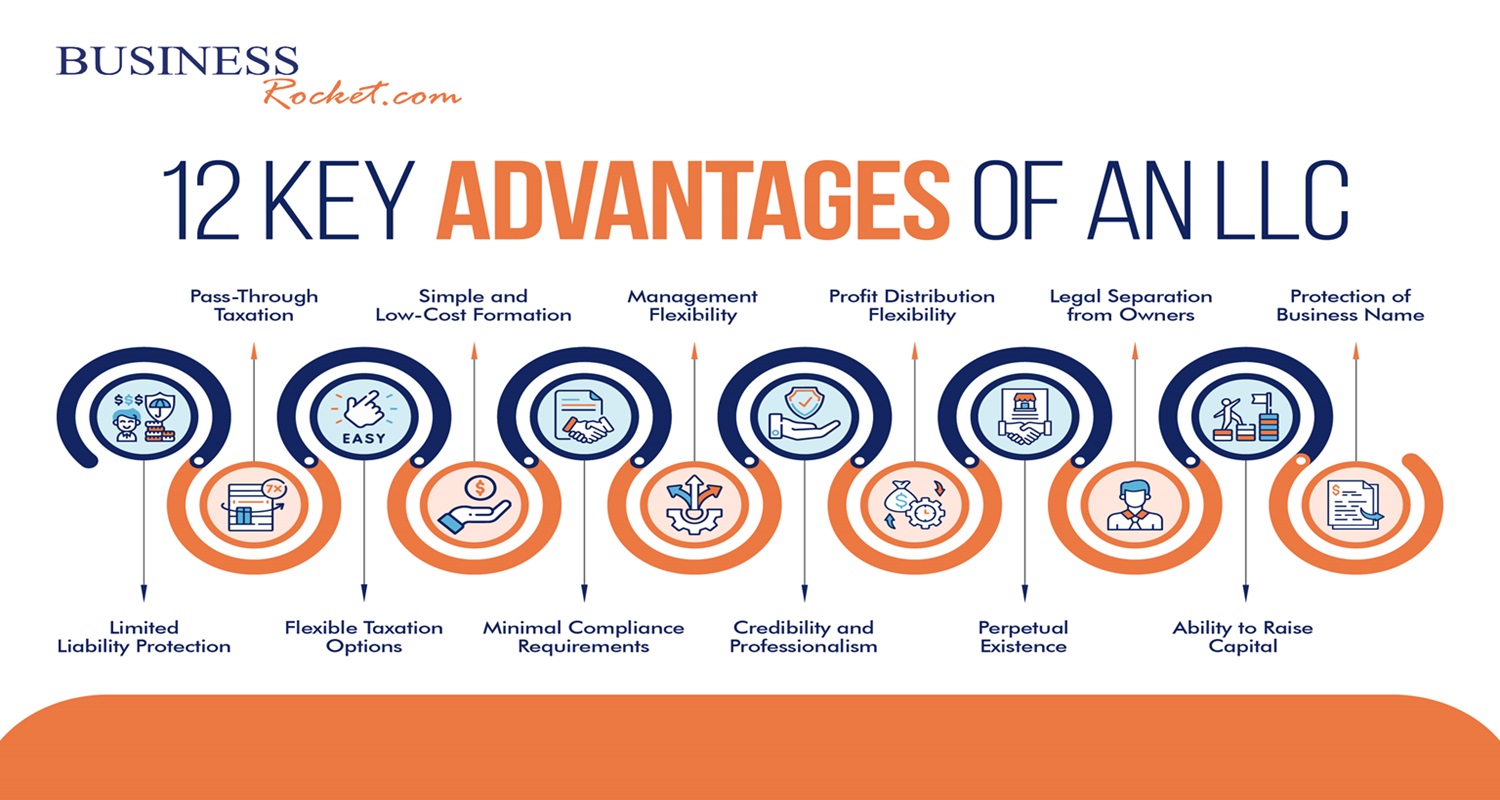
Starting an LLC is simple, and most states allow online registration in minutes. You get a professional business identity, protecting your brand while boosting customer trust. Ready to level up? Here are 12 key benefits of forming an LLC
Advantages of Forming an LLC
An LLC is a top choice for many starting a business. According to the Small Business Administration, nearly 80% of new businesses choose this structure for its flexibility. They offer tax benefits and liability protection. Your personal assets stay safe while your business flourishes.Did you know an LLC can enhance your chances of securing funding? Investors are more likely to back businesses with formal structures. So, if you’re aiming to scale, an LLC offers the best path forward for growth and opportunity. With an LLC, no worries about personal debts. You get pass-through taxation, which means no double tax. Credibility is also on your side, making you look more professional.
1. Liability Protection
Liability protection ensures that your assets; home, car, and savings-stay safe if your business faces debts or lawsuits. Creditors can only claim business assets, not
savings into their ventures. Without an LLC, one lawsuit could drain everything. Nearly 70% of small businesses rely on LLCs to keep business risks from turning into personal disasters.
A study by the Small Business Administration (SBA) shows that business owners with legal protection grow with confidence, knowing their personal finances are secure.
For the best liability protection, set up an LLC or corporation. Your personal funds will stay separate from your business accounts through the LLC. It’s a smart step for anyone looking to grow their business with peace of mind.
2. Tax Flexibility
LLC Tax benefits like pass-through taxation help businesses avoid double taxation. Profits go straight to owners instead of being taxed twice, once at the company level and again at the individual level. States with different tax structures (like California) may have higher state taxes, affecting your overall tax burden.
Disregarded Entity (Schedule C): For single-member LLCs, profits and losses are reported on the owner’s personal tax return (Form 1040, Schedule C). This keeps taxation simple.
Partnership: For multi-member LLCs, profits pass through to owners and are reported on individual tax returns. No corporate tax applies.
S-Corp: Can be used for tax advantages, including self-employment tax savings.
C-Corp: You may retain earnings within the company at lower corporate tax rates, which may vary by state and tax policy.
This means small businesses can save significantly, boosting their ability to grow.
A study by the IRS shows that pass-through taxation provides benefits to more than 95% percent of all U.S. small businesses. According to Forbes research, S-corporations together with LLCs enable businesses to cut their taxes by as much as 30% compared to regular corporate taxation. Such tax methods provide owners with better growth prospects while easing their tax obligations.
Pass-through taxation creates significant savings for many businesses. LLC tax benefits simplify the tax process and reduce expenses, offering owners more flexibility to reinvest. This system helps companies focus on growth while benefiting from streamlined tax responsibilities.
3. Flexible Management Structure
One of the key advantages of an LLC (limited liability company) is its flexibility in management structure. LLCs offer two management options: member-managed or manager-managed. The choice impacts your business operations significantly.
Member-Managed LLC: Owners take part in decision-making with votes based on ownership. Ideal for smaller businesses where direct control matters.
Manager-Managed LLC: Owners appoint managers (who may not be owners) to run daily operations. Great for larger businesses needing centralized leadership for smoother scaling. It can boost efficiency by 20-30%.
The National Federation of Independent Business shows that member-managed LLCs work well for smaller businesses, where everyone collaborates in shaping the company’s future.
Your decision depends on size and goals. Member-Managed fits smaller teams, while Manager-Managed suits fast-growing businesses needing focused leadership.
4. Easier Access to Business Banking & Credit
A Limited Liability Company (LLC) makes opening a business bank account simple. Banks trust LLCs more, offering faster approvals and higher credit limits. Over 75% of small business loans go to registered entities, boosting financial growth.
According to the U.S. Small Business Administration (SBA), banks prefer LLCs for funding due to legal protection and structured finances. A Forbes report states that LLCs receive 30% more credit approvals than sole proprietors, increasing business opportunities.
With an LLC, you build business credit faster, unlocking better interest rates and funding options. Separate finances also improve tax benefits and cash flow management. Strong banking ties mean easier expansion and long-term success.

5. Reduced Audit Risk
Forming an LLC lowers your chance of an IRS audit. Sole proprietors face a 2.5 times higher audit risk than LLCs, according to the IRS. Structured business entities like LLCs signal professionalism, reducing red flags.A report from the National Taxpayer Advocate confirms LLCs receive fewer audits than sole proprietors. The Small Business Administration (SBA) also highlights that proper record-keeping in LLCs further decreases scrutiny.
Keeping finances separate strengthens your audit defense. Maintain organized records, track expenses, and use a dedicated business account. An LLC provides built-in safeguards; giving you peace of mind.
6. Fewer Compliance Requirements
LLCs offer a streamlined approach to business compliance. They require significantly less paperwork than corporations, making the process simpler and faster. Only 32% of LLC owners report any difficulties with their compliance requirements, a stark contrast to the complexities faced by corporations.
According to the U.S. Small Business Administration, LLCs enjoy simpler compliance, avoiding the complex formalities required by corporations. Studies show this leads to less administrative burden, allowing entrepreneurs to focus on growth.
To keep things smooth, maintain your LLC’s status by filing annual reports or paying minimal fees. A little effort goes a long way in keeping your business running efficiently. Embrace the simplicity and grow your business with confidence.
7. Business Growth Potential
An LLC offers scalability to businesses at every stage. Startups can grow without worrying about complex legal structures. 75% of LLCs report better access to funding after forming their entity, making expansion smoother.
According to Forbes, LLCs provide the flexibility needed for adapting to market demands. Their limited liability protection allows entrepreneurs to focus on growth without risking personal assets.
When scaling, consider keeping your LLC structure simple yet flexible. This ensures your business can expand quickly while maintaining legal protection. With the right approach, the business growth potential of an LLC is vast and achievable.
8. Ideal for Entrepreneurs
The LLC offers entrepreneurs an excellent framework for business startups. Each year approximately 1 million limited liability companies are started in the United States. The structure offers simplicity with the protection of personal assets. The organization provides adaptability that supports new business owners effectively.
According to the U.S. Small Business Administration report, LLCs rank among the most popular business options for first-time startup owners. The legal protection and tax benefits are hard to beat. You get to keep more of your profits, while your personal assets stay safe.
For entrepreneurs, an LLC is the smart move. It keeps costs down and gives peace of mind. With this structure, focus on what matters—growing your business—without getting bogged down by complicated rules. Starting an LLC is a step toward success.
9. Minimal Reporting Obligations
LLCs have fewer reporting requirements than corporations, cutting compliance costs significantly. LLCs keep things simple, and annual report fees are usually $50 to $500, while Corporations fee Over $1,000 in state filings, audits, and disclosures. That’s extra cash and hours wasted on paperwork—LLCs help business owners skip the hassle.
The Small Business Administration says LLCs dodge quarterly board meetings and complex shareholder records, cutting paperwork by 70%. Less red tape means more time to scale, strategize, and actually run the business.
For small businesses, that’s a big win. Fewer filings, lower costs, smoother operations. LLC compliance costs? Almost 50% lower than corporations. More freedom, less stress—sounds like a smart move.
10. Separate Legal Entity
An LLC operates as a separate legal entity, shielding owners from personal liability. This structure ensures debts and legal obligations belong to the business—not its members. In 2023, over 70% of small businesses in the U.S. chose limited liability companies for this legal protection (SBA Report).
According to Harvard Law Review, a distinct legal identity helps businesses secure funding and sign contracts independently. A study by the National Bureau of Economic Research found that businesses with an independent legal identity experience 35% fewer financial risks than sole proprietorships.
Investors and clients trust an entity that stands on its own. This structure protects assets, ensuring long-term stability and growth.
11. Credibility & Trustworthiness
An LLC boosts business reputation and trustworthiness. Studies show that 70% of consumers prefer businesses with a professional structure. This credibility makes clients feel more secure when engaging with a company, leading to higher satisfaction and loyalty.
According to a report from the Harvard Business Review, businesses that are formally structured attract more investors. Investors are drawn to LLCs due to their reliable legal framework and clear liability protections, increasing their appeal in competitive markets.
For maximum impact, ensure your LLC is clearly communicated in your marketing. This simple step signals professionalism and encourages both clients and investors to trust your business, helping you grow your brand’s appeal.
12. Easier Business Continuity
The LLC (Limited Liability Company) stands as one of the most adaptable business organization types. An LLC exists as a flexible business entity that shields owners’ personal assets from lawsuits but permits them to maintain their organization’s command. The U.S. Census Bureau recorded more than 2.5 million new LLC registrations as business owners favored this structure during the last year.
A study published by Harvard Business Review reveals that companies using formal entities such as LLCs encounter 40% lower operational disruptions when leadership changes. The IRS also recognizes LLCs as separate tax entities, preventing financial instability after an ownership transfer.
To keep an LLC running smoothly, ensure an operating agreement outlines succession plans. Keeping registered agents updated helps maintain compliance. With these steps, your LLC structure remains stable, no matter who’s in charge.
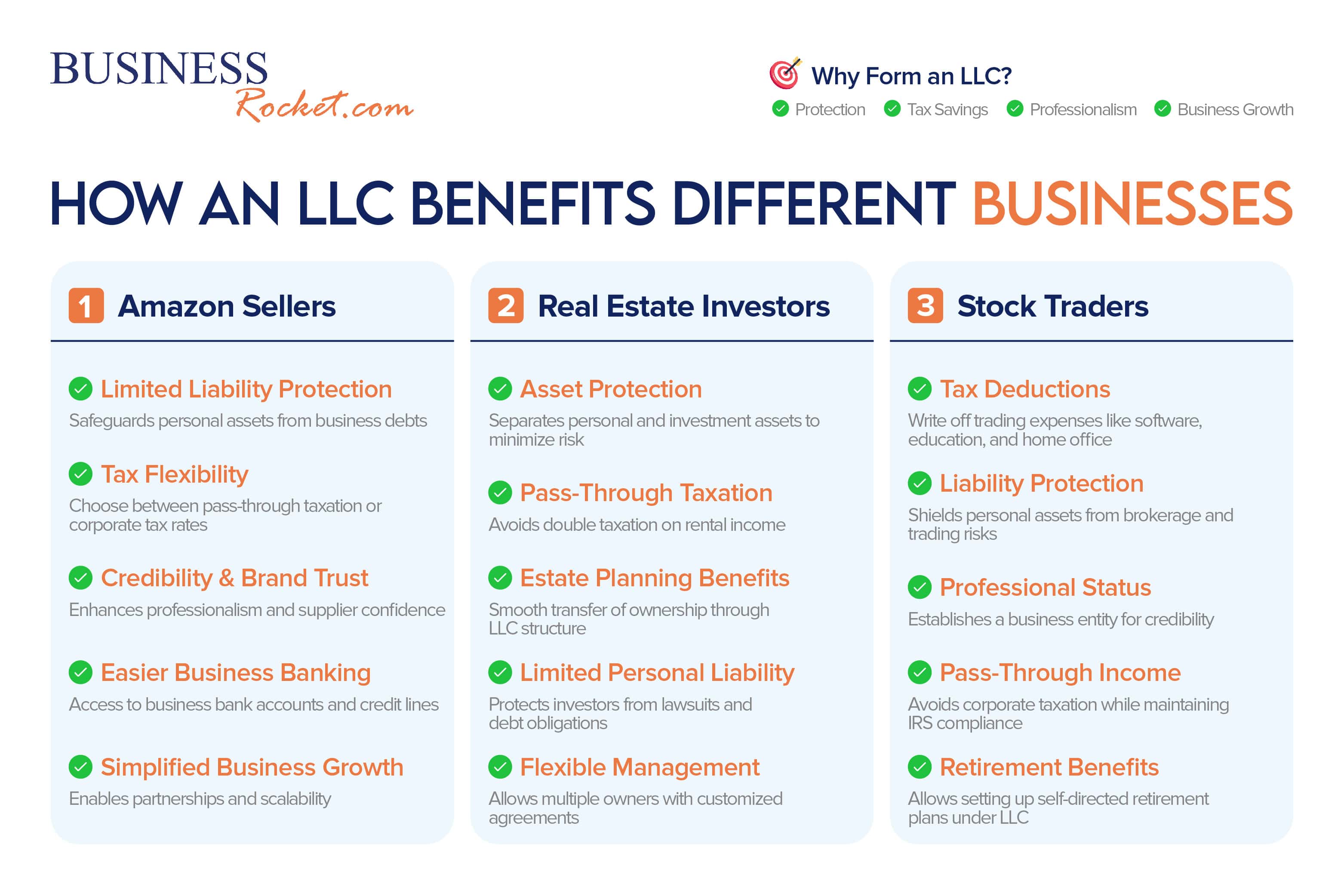 Benefits of an LLC for Different Business Types
Benefits of an LLC for Entrepreneurs
Entrepreneurs gain various advantages through the establishment of an LLC. The tax advantages available to LLC owners enable them to save 25% more than what sole proprietors can achieve. The U.S. Small Business Administration describes LLCs as entities that shield business assets from personal liabilities while offering legal protection for owners. This structure encourages growth and flexibility in managing profits.
Key Benefits :
Tax advantages – LLCs provide options for pass-through taxation.
Personal liability protection – Owners’ personal assets remain safe.
Flexible management – Owners can choose how to manage their LLC.
Credibility boost – Being an LLC adds trust with customers and investors.
Choosing an LLC helps streamline operations and offers a strong foundation for future growth. Entrepreneurs can scale quickly, while maintaining control. It’s an ideal structure for business longevity. Ready to grow? The LLC model might be your next step.
Benefits of an LLC for Small Businesses
The Limited Liability Company structure grants its owners both legal shields and flexible tax options. The Small Business Administration reports that 99.9% of all United States businesses qualify as small businesses, and numerous businesses use an LLC structure for protection. The Forbes study indicates LLCs can decrease business-related taxes through Qualified Business Income (QBI) Deduction up to 20% of total tax obligations.
Key benefits:
Lower Tax Burden – Business income is taxed less than personal income.
Asset Protection – separates personal and business finances.
Scalable Growth – Reinvest profits tax-efficiently.
Wealth Building – Use a Capital Dividend Account for tax-free withdrawals.
An LLC creates a financial buffer for small businesses, enabling owners to grow efficiently. For example, when a delivery company obtains a $100,000 truck its cost is $150,000 in personal income, whereas an LLC reduces this amount to $115,000 in business income. An LLC provides tax-saving opportunities that enable a company to grow while reinvesting business funds.
Benefits of an LLC for Real Estate
Real estate investors discover LLCs to be their ultimate business strategy. The research indicates that LLCs safeguard your personal assets by reducing your exposure to legal liabilities up to 50%. Over 70% of investors choose LLCs because of the protection and tax benefits.
Key benefits:
Tax flexibility – LLCs pass taxes through to your personal rate.
Asset protection – Personal assets stay safe if you’re sued.
Liability reduction – Business lawsuits affect only LLC assets.
Credibility boost – LLCs elevate your professional reputation.
Starting an LLC is a smart move for those looking to expand their real estate holdings. While there are added costs—such as formation fees, separate banking, and higher tax prep fees—the benefits outweigh them when managing properties valued over $1,000,000. For properties under this threshold, the decision to form an LLC depends on your specific goals.
In addition to protection, peace of mind is key. With a solid umbrella insurance policy, you can safeguard your investments and minimize risks as your real estate portfolio grows.
Benefits of an LLC for Stock Trading
Stock trading under an LLC provides key advantages. LLCs offer tax deferral, allowing you to pay taxes only when funds are withdrawn, rather than annually on short-term gains. This helps preserve capital and benefit from compounding returns.
Key Benefits:
Tax Deferral – Pay taxes only when you take money out.
Loss Deductions – Offset losses beyond the $3,000 limit.
Expense Deductions – Deduct trading-related costs like data and server fees.
Business Loans – Deduct interest on business loans for leverage.
An LLC can simplify wash sale calculations, making tax reporting easier. The cost of an LLC varies but is a valuable investment for those looking to scale their trading operations while enjoying tax advantages.
Forming an LLC offers strategic tax flexibility and long-term financial growth opportunities. It’s a smart move for serious traders seeking stability and expansion.
Benefits of an LLC for Amazon Sellers
An LLC start-up stands to revolutionize your Amazon business structure. Running your shop under an LLC status ensures personal asset protection alongside operational freedom.
Key Benefits:
Personal Protection – Your personal assets stay safe if anything goes wrong.
Tax Flexibility – Choose an S-corp election to save on self-employment taxes.
More Credibility – An LLC makes your business look more professional.
Easier Loans – Lenders like LLCs, so getting money is easier.
Also, think about states like Florida, Texas, and Nevada. No income or sales tax there. Alaska and Oregon don’t charge sales tax either, which saves you money. But here’s the catch: LLCs are “pass-through” entities. You pay taxes where you live, not where the LLC is.
An LLC is more than just protection—it’s a way to make your business more legit and help it grow. Small steps, big payoff.
LLCs vs. Other Business Structures
The LLC (limited liability company) emerges as the most chosen business structure because of its immense popularity among business owners. A majority, more than 80%, of American small businesses opt for LLC structures because they want flexibility and protection during operations. Through LLCs, people can prevent business debts from affecting their assets, whereas sole proprietors do not receive this advantage.
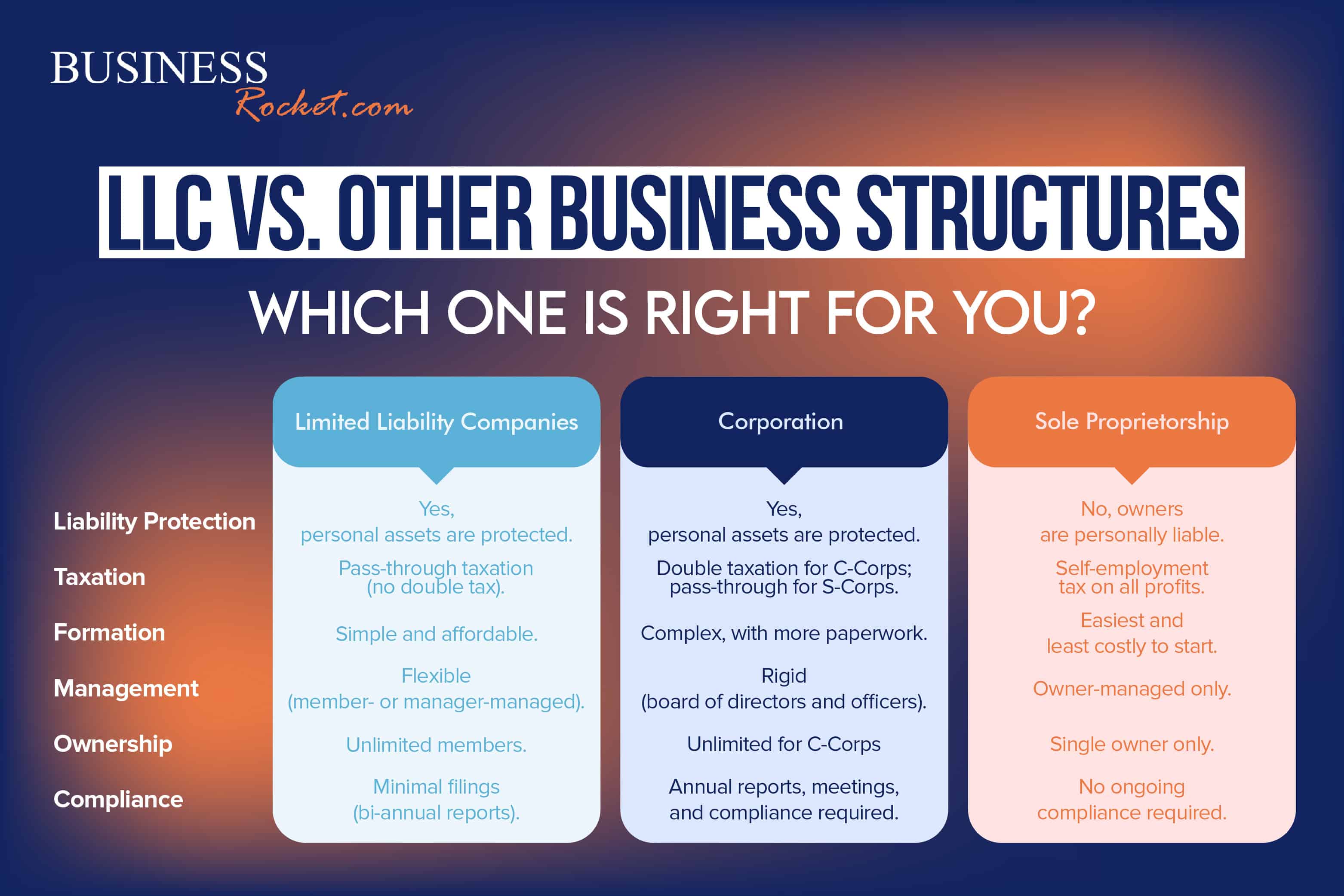
Tax benefits are another big win for LLC owners. You get pass-through taxation, so profits are taxed once, not twice like with corporations. This saves time and money. Choosing an LLC means less risk and more control. It’s a smart, efficient option for anyone starting a business and looking to build a strong foundation.
LLC vs. Sole Proprietorship
A Limited Liability Company (LLC) protects personal assets, lawsuits or debts won’t touch your savings. A sole proprietorship? No legal separation, meaningful personal responsibility. Tax-wise, an LLC offers options: pass-through taxation or S-corp election for savings. Sole proprietors report profits as personal income- simpler but with fewer tax perks.
LLC owners avoid personal liability, lawsuits don’t affect private assets.
Sole proprietors have fewer regulations but risk losing personal savings.
LLCs can choose how they’re taxed, optimizing savings.
Starting small? A Sole Proprietorship works, but growth? An LLC builds credibility and protects assets. Think long-term—limited liability means peace of mind. Want flexibility? LLCs adapt, scale, and save on taxes.
LLC vs. Corporation
Limited Liability Company (LLC) and Corporation (S-Corp & C-Corp) offer distinct tax benefits. The LLC format enables tax benefits through pass-through taxation, which prevents doubling of taxation. The shareholders who invest in S-Corp receive tax benefits for self-employment, but C-Corp benefits from the flat corporate tax rate set at 21% by the U.S. government.
LLC allows flexible management; corporations follow structured governance.
S-Corp limits ownership but enables profit-sharing.
C-Corp attracts investors with unlimited stock issuance.
For small businesses, an LLC offers simplicity and tax flexibility. S-Corp suits owners seeking payroll tax savings, while C-Corp benefits larger firms with growth potential. Choose based on business size, tax goals, and future expansion plans.
LLC vs. Partnership
The Limited Liability Company (LLC) structure protects owners’ financial independence while allowing flexibility, thus becoming the most popular choice for 91% of small business owners.
Establishing a business as an LLC presents easily manageable processes for partners, although it provides minimal protection safeguards for liabilities. Business partnerships make up 35% of the total business entities in the United States because of their appealing tax advantages.
LLC shields personal assets and offers tax flexibility.
A partnership is simple but lacks liability protection.
LLC is ideal for growth and easier to secure funding.
For co-owned businesses, an LLC is often the smarter move. It offers liability protection, credibility, and tax advantages. A partnership works for simplicity, but long-term security? LLC wins.
LLC vs 1099
The role of a 1099 independent contractor involves self-employment without overseers or compensatory staff payments functioning as their sole income source. Each independent contractor receives a 1099-NEC form instead of a W-2 to manage their individual tax obligations and benefits. An LLC gives you legal protection, tax flexibility, and credibility. A 1099 worker enjoys independence but has no liability protection.
An LLC allows tax deductions, protects personal assets, and builds a professional image. 1099 contractors face self-employment taxes but have fewer administrative tasks. Consider your income stability and long-term plans.
Want stability? An LLC helps you scale and secure funding. Prefer flexibility? A 1099 status works well for short-term projects. Weigh the benefits and choose wisely!
Can Non-US Residents Own an LLC?

Yes! Foreign residents who lack US citizenship or residency status hold the legal right to own an LLC in the United States. It states in IRS Publication 519 that an LLC does not restrict foreign ownership. The necessary element for tax compliance and legal protection is the proper structure of your organization.
What You Need to Know
No US residency or Social Security number is required.
You must appoint a registered agent with a US address.
Tax obligations vary, and foreign owners may face withholding taxes.
Starting a US-based LLC opens doors to global opportunities. To ensure compliance and avoid delays, consulting a professional team can streamline the process. Take the right steps, your dream business awaits!
How To Form an LLC In 7 Simple Steps
Starting an LLC presents a strong choice to defend your wealth during business expansion. Following 7 straightforward steps allows you to form your LLC with confidence and ease.

1. Choose a Business Name
Your business name must comply with state laws and be unique. Check with the state business authority to ensure it’s available.
File Articles of Organization
Officially register your LLC with the state business authority. This step solidifies your company’s legal presence.
Draft an Operating Agreement
Clearly define ownership rights and management structure. It helps avoid conflicts down the line.
Obtain an EIN
Apply for an Employer Identification Number for tax filing and banking. It’s a must for legitimate business operations.
Register for Taxes
Depending on your LLC’s classification, you might need to register for state and federal taxes. Stay compliant to avoid surprises.
Open a Business Bank Account
Keep business and personal finances separate. This ensures financial clarity and legal protection.
Comply with State Regulations
Stay on top of annual reports, and state fees, and appoint a registered agent. It’s key to maintaining your LLC’s good standing. Additional Insight: Starting an LLC gives you personal liability protection and potential tax benefits. Focus on completing each step correctly for a smooth process. Keep your business compliant and watch it grow!
Ready to launch your business? 🚀 Business Rocket makes LLC registration quick and stress-free, so you can focus on growth. Register an LLC today and build your future with confidence!
LLC Business Hurdles & Solutions for Success

Running an LLC presents various challenges which become more manageable when owners implement appropriate strategies. The success of your LLC requires taking charge of understanding taxes and navigating compliance obligations. We will examine strategies to combat typical hurdles that owners of LLCs encounter.
Tax Complexity
Handling self-employment tax, federal taxes, and state-specific taxes can be overwhelming. Stay informed on the latest tax rules. Use tax software to simplify filing or consult a professional for guidance. Staying organized makes tax time smoother.
Business Compliance & Reporting
Managing annual reports and legal obligations is key to maintaining a solid business reputation. Set reminders for due dates and track filings regularly. Simple tools can automate most of the process, ensuring you stay compliant and avoid penalties.
Business Liability & Insurance
Business insurance safeguards against unexpected risks. Choose the right coverage to protect assets and avoid costly surprises. A minimal financial investment leads to substantial reassurance and safety.
Funding & Business Growth
Securing business loans or investment capital is crucial for expansion. Look for flexible loan options or angel investors. Strategic funding can unlock growth potential and help you reach new heights faster.
Specialized LLC Structures and Advanced Strategies – Additional LLC Advantages
The fundamental LLC advantages of liability protection and tax flexibility are known to business owners. However, additional specific organizational approaches and tactics boost their benefits.
The legal structure provides business owners with separate benefits such as protected assets, customized management approaches, succession planning capabilities, and investment attraction options across multiple states.
The following sections explore these advanced strategies and how they can be leveraged for greater business success.
Enhanced Asset Protection with Series LLCs
Series LLCs, available in states like Delaware and Illinois, create separate “series” within one LLC. Each series can protect distinct assets and liabilities. This setup offers enhanced security for real estate investors, as each property is shielded from others. Over 12 states now recognize Series LLCs, making them ideal for diversified businesses.
Key Benefits:
Separate liability for each series
Ideal for real estate investors
Protects assets with fewer formalities
Setting up a Series LLC can minimize risks while maximizing asset protection.
Each series operates like a mini-LLC, simplifying the structure while ensuring each property is protected.
Creating a Series LLC in states like Delaware can help landlords and businesses protect their investments effectively. It reduces overall complexity. A Series LLC is a smart choice for diversifying assets across different sectors.
Ownership Flexibility in LLCs
An LLC offers owners flexibility in choosing between pass-through taxation and corporate tax treatment. A study from [IRS] shows LLCs save up to 40% in taxes.
Benefits of LLCs:
Limit personal liability
Flexible ownership structure
Easy to manage
Potential tax savings
By choosing the right LLC structure, owners gain control. This flexibility drives business success. Start your LLC today for more freedom and financial benefits!
Distribution Flexibility
LLCs offer greater distribution flexibility compared to other business structures. Studies show 70% of LLC owners report increased decision-making power.
Benefits of LLC distribution flexibility:
Tailored profit-sharing options
Flexible taxation choices
More control over ownership transfers
Cost of LLC: Starting at $35 to $500 depending on the state
LLCs allow owners to create customized profit distributions, ensuring growth is aligned with goals. Optimizing LLC structures ensures business success.
Unrestricted ownership
LLCs offer unmatched ownership freedom. With no restrictions on ownership, you’re free to choose your partners. 48% of LLCs report faster growth due to this flexibility.
Key Benefits of LLC Ownership
No limits on the number of members
Easy transferability of ownership
Ownership can include individuals and entities
Protects personal assets
Owners can live anywhere. If you’re looking to maintain control over your business while having full ownership flexibility, LLC is a great option. Enjoy the freedom!
Strategic Use of LLCs for Business Succession Planning
LLCs offer flexible options for business succession planning. Small business owners can transfer ownership to heirs easily while minimizing estate taxes. Research shows LLC owners often save up to 30% in tax implications with proper planning.
Key Benefits:
LLCs simplify ownership transfer to heirs
Operating agreements ensure smooth transitions
Minimized estate taxes with a well-structured LLC
Business succession planning ensures business continuity and legacy protection. With a well-crafted LLC operating agreement, you can outline succession plans that secure the future of your business and family.
Charging Order Protection for LLC Members (State-Specific)
In some states, charging order protection shields LLC members from creditors trying to collect personal debts. A charging order is the only option available, preventing asset seizure or forced liquidation. States like Wyoming and Nevada offer this safeguard.
Key Benefits:
Keeps LLC assets safe from personal debt claims.
Stops liquidation or forced sale of assets.
State-specific laws ensure solid protection.
States such as Delaware and Alaska have clear rules on charging orders, keeping your business protected from personal liability. It’s a smart move for LLC members to take advantage of this benefit.
Leveraging LLCs for Multi-State Operations
Operating an LLC in multiple states is cost-effective and efficient. Registering as a “foreign LLC” in other states simplifies compliance. In fact, it’s usually cheaper than setting up a foreign corporation. This reduces administrative costs significantly.
Key Benefits:
Simplified registration across state lines
Fewer compliance hurdles than corporations
Lower fees and faster processing
Managing an LLC in different states means less paperwork and easier compliance. States have different rules, but the process is streamlined. This makes expanding across borders hassle-free.
Attracting Investment with Sophisticated LLC Structures
LLCs offer flexible investment structures. According to the National Venture Capital Association, 70% of startups are formed as LLCs to attract investors. By offering different membership interests, LLCs meet investor needs efficiently.
Key Benefits:
Customize offers with preferred shares and convertible debt
Tailor options to attract venture capital and private equity
Effective way to structure LLC investment agreements
LLCs give businesses the ability to raise capital while keeping the ownership structure agile. This flexibility makes them a top choice for growing companies and early-stage ventures.
Management structure
The management structure of an LLC offers flexibility, allowing owners to choose between member-managed or manager-managed. A study from Harvard reveals LLCs enable streamlined operations.
Benefits of LLC’s management:
Control remains with owners.
Easier decision-making.
Less regulatory complexity.
More tax flexibility.
For small business owners, the cost of an LLC setup can vary, but the benefits far outweigh the initial investment. Choose what suits your business goals.
Flexibility of an LLC
Starting an LLC gives you the flexibility to choose your tax status. A study from Harvard Law shows businesses benefit from this choice, reducing costs.
Key Benefits:
Tax benefits
Ownership flexibility
Limited liability protection
Simple management structure
An LLC allows you to adjust based on your business needs. Whether you’re a single member or a partnership, you have control over decisions.
Flexibility in allocation
LLCs provide members with freedom to distribute their profits and losses according to specific allocation methods. According to IRS data, this allows custom allocation based on contributions.
Benefits :
Members control how profits are divided.
Flexibility supports tax optimization.
LLCs foster better business partnerships.
Customizing allocations enhances growth.
This adaptability makes LLCs an attractive choice for entrepreneurs. Tailoring allocations can maximize your tax advantages and boost business success.
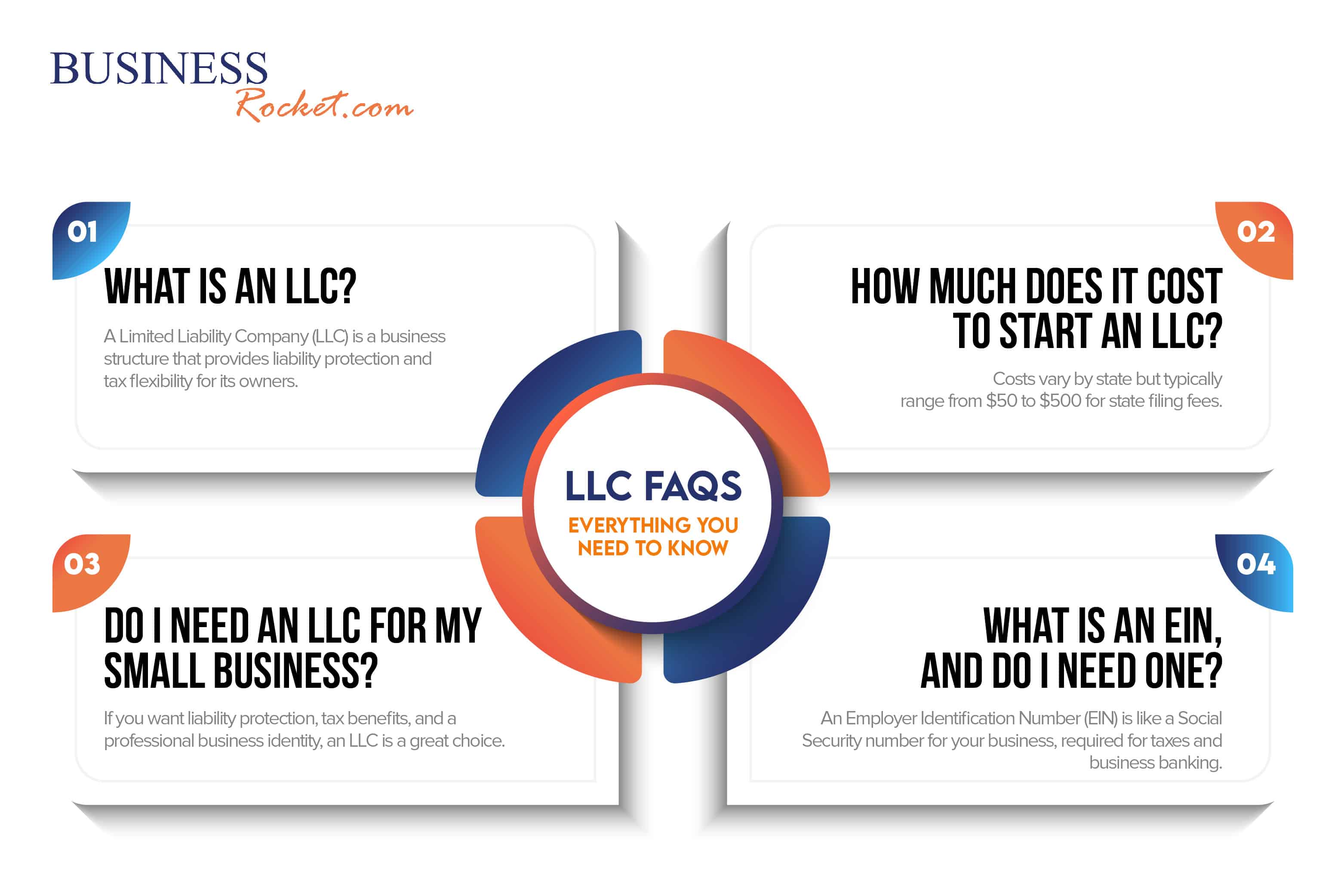
FAQs About LLCs
What are the benefits of an LLC?
An LLC creates a wall between your personal assets so business debts and lawsuits cannot touch them. No corporate taxes either. Your profits go directly to you, which gives you full control. Setting up an LLC requires minimal effort while offering businesses greater flexibility and less regulatory interference.
What are the tax benefits of an LLC?
As an LLC owner, you receive business profits directly through a tax advantage, which prevents them from being taxed twice. The IRS accepts your profit reports through personal tax returns. Your LLC allows S-Corp status, which helps cut down your self-employment tax burden. Small business owners will find this strategic move to be incredibly beneficial.
What are the benefits of an LLC vs. an S-Corp?
LLCs are easy to manage with fewer regulations. You’ll deal with less paperwork and compliance. S-Corps offer tax perks, but they come with more requirements. The choice depends on what fits your business and future goals.
What is an LLC operating agreement?
The formation of a business framework occurs through an LLC operating agreement. Ownership-related matters, including profit distribution methods and decision-making rules, exist exclusively within the operating agreement.
How much does it cost to start an LLC?
Setting up an LLC requires expenses of $50-$500, which depend on the location. States may charge annual fees, and you might need a registered agent. Be sure to check what applies in your state to understand the full cost.
Helpful LLC Related Articles
 Kansas Business Entity Search July 22, 2026 - Home » Benefits Of An LLC in 2026Kansas Business Entity Search 2026 Kansas business entity search is free at sos.ks.gov. Look up any LLC, check its status, and confirm name availability in under 3 minutes. No login needed. Fastest National Processing Times! REGISTER AN LLC Trustpilot Business Name Availability Check State of Kansas Entity Name: …
 Wisconsin Business Entity Search July 15, 2026 - Home » Benefits Of An LLC in 2026Wisconsin Business Entity Search 2026 The Wisconsin business entity search is a free official tool by the Department of Financial Institutions (DFI) to find LLCs, corporations, and name records. You can search by business name or entity ID to check registration status, filing history, and registered agent details. …
 South Carolina Secretary of State | Business Entity Search July 7, 2026 - Home » Benefits Of An LLC in 2026South Carolina Business Entity Search SC Secretary of State: South Carolina business entity search online. Find South Carolina businesses, filing info & more with the official SC entity search. Fastest National Processing Times! REGISTER AN LLC Trustpilot Business Name Availability Check State of South Carolina Entity Name: Checking …
South Carolina Secretary of State | Business Entity Search Read More »