1. Check How Your Business Is Taxed
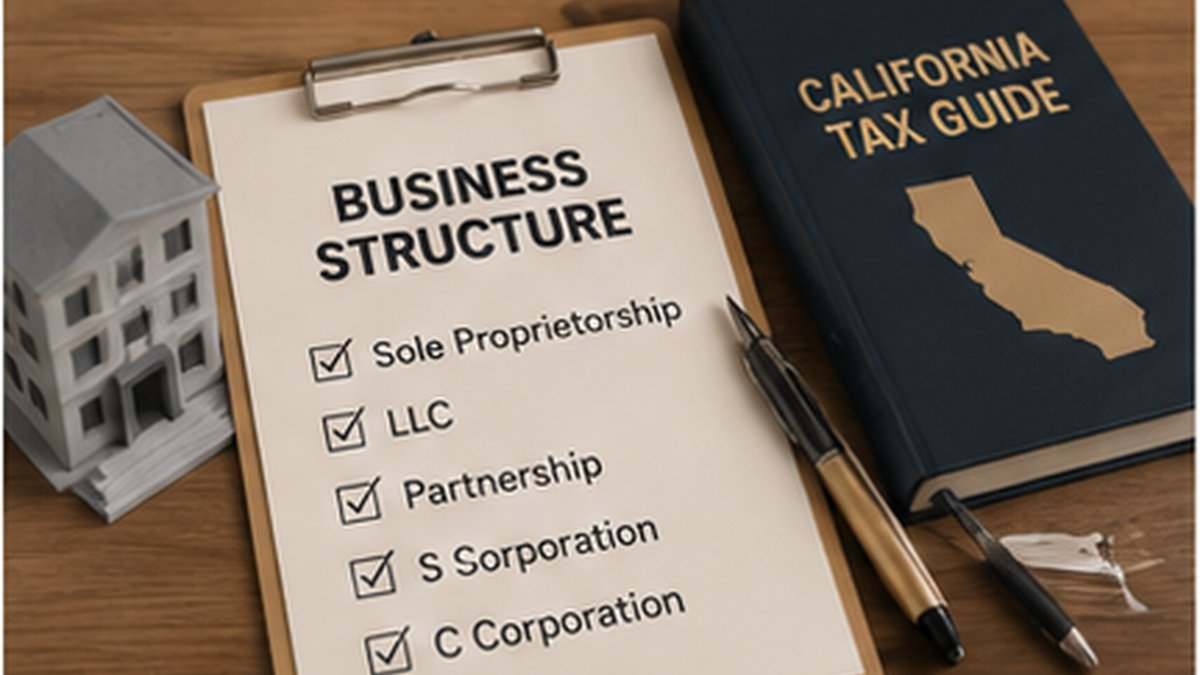
Look at the tax setup before you start filling out forms. A sole proprietor normally reports business income on Schedule C, and the profit becomes part of the owner’s federal Form 1040. California then uses that income when the state return is prepared. This keeps the federal and California tax records connected.
A single-member LLC may follow much the same federal tax path if no corporate election was made. The company is still an LLC under California law, but the IRS may treat it as part of the owner’s tax return. Add another owner and the tax setup can change. A partnership generally files Form 1065 with the IRS, while California general partnerships commonly use Form 565.
An LLC has its own California return, and many California LLCs file Form 568 with the Franchise Tax Board. The return covers the LLC’s income, members, deductions, and other state tax details. Corporations take another route. A C corporation normally files federal Form 1120 and California Form 100, while an S corporation usually files Form 1120-S with the IRS and Form 100S in California.
So don’t pick a tax form only because the business has “LLC” or “Inc.” in its name. Check how the business is actually taxed first. The tax status tells you which federal return applies and usually points you toward the right California return as well.
2. Get Your Tax Records in One Place
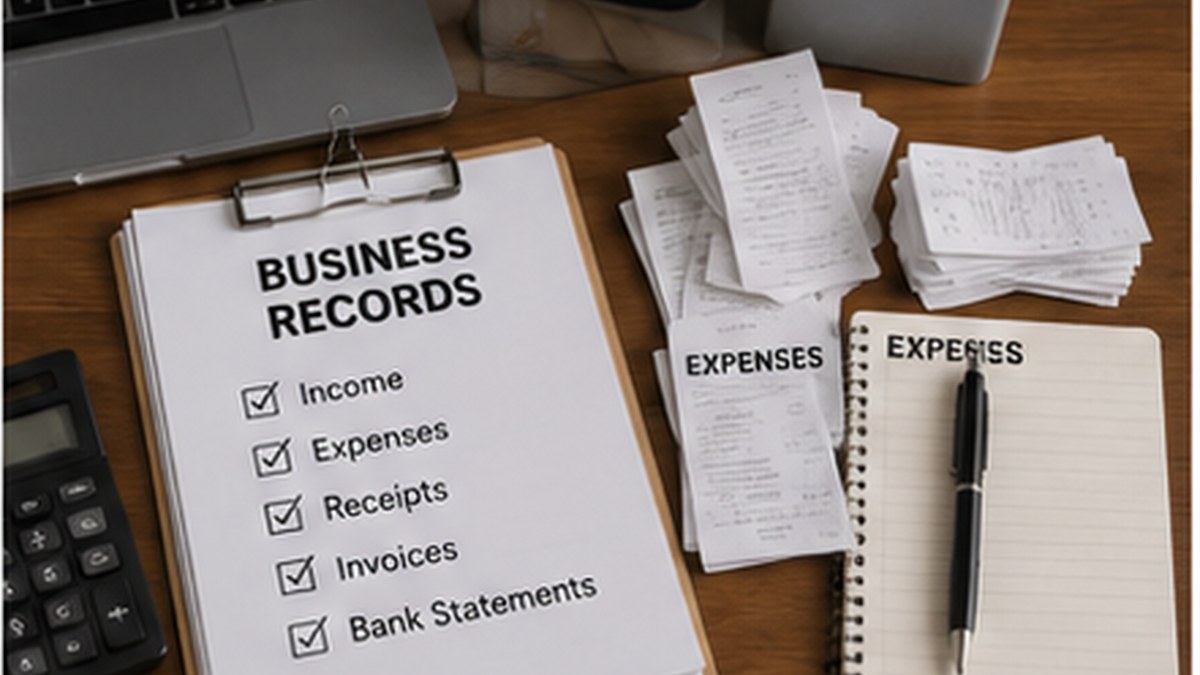
Your tax return comes from the records the business created during the year. Start with money that came in, including customer payments, card sales, online orders, invoices, checks, cash, marketplace payouts, and Forms 1099. These records help show what the business actually earned. They also give you a way to compare the tax return with your bank and payment accounts.
Then look at what went out. Rent, software, office supplies, equipment, insurance, advertising, contractor payments, and professional services may all appear in the business records. A business phone bill may matter too if the expense qualifies. The exact list changes with the type of business you run.
A small online store may have product costs, shipping bills, Stripe or PayPal reports, refunds, sales tax records, and marketplace fees. A consultant may have client payments, software costs, travel, a laptop, and a few monthly bills. Neither business will have the same tax file because their daily activity is different.
If employees work for you, keep payroll reports close by because wages, withholding, payroll deposits, and employee records will matter when EDD forms are prepared. A business that sells taxable goods needs sales records too, including totals, refunds, resale certificates, invoices, and purchases that may be subject to use tax. These records give the return its numbers, so tax filing should not depend on trying to remember what happened six months ago.
3. File the Federal Return With the IRS
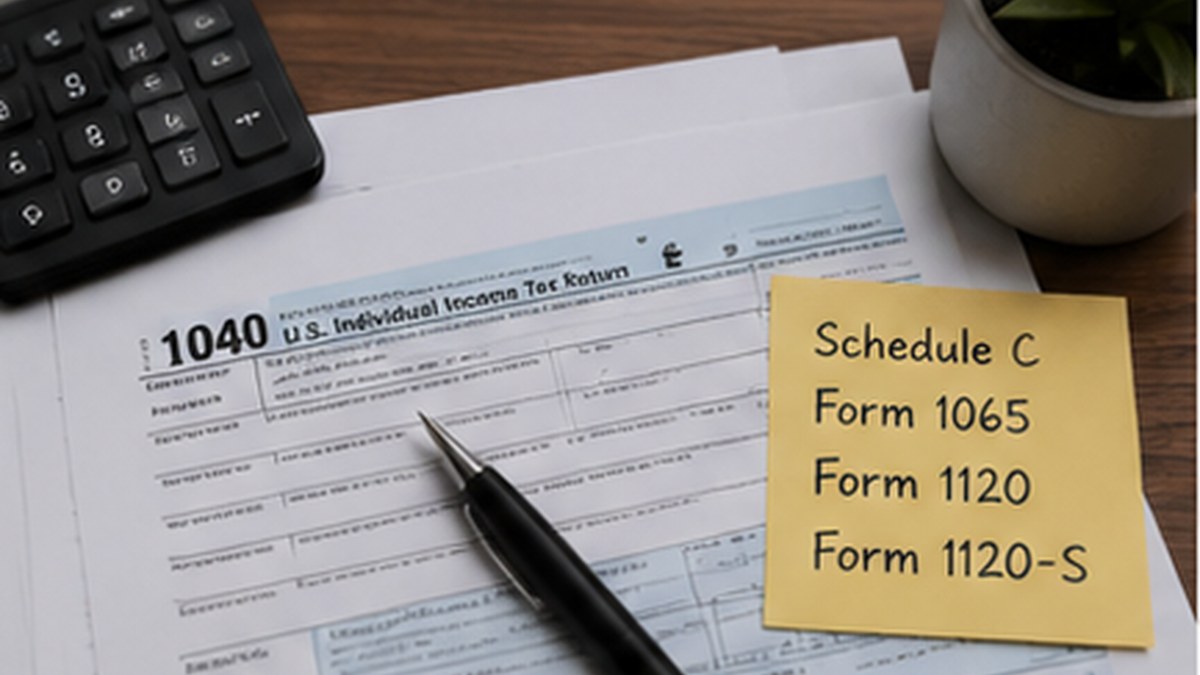
California does not replace your federal tax return. The IRS still wants the federal side of the business reported, and the form depends on the tax structure. Each business type has its own return, even when the business operates in the same state. The federal return often provides numbers that later appear on the California return.
- A sole proprietor normally uses Schedule C with Form 1040.
- A partnership files Form 1065.
- A C corporation uses Form 1120.
- An S corporation uses Form 1120-S.
- Those forms may look different, but they all show what the business earned after its allowed costs and deductions.
A self-employed owner may also owe self-employment tax. That tax covers Social Security and Medicare on qualifying self-employment income. Some owners pay federal tax during the year instead of waiting for the final return. Estimated payments can become important when enough tax is not being withheld somewhere else.
For a sole proprietor, Form 1040-ES is commonly used for estimated payments. The federal return can also supply income and deduction figures needed for the California filing. That is why it usually makes sense to get the federal side in order before moving between state forms.
4. File the California Return With the Franchise Tax Board
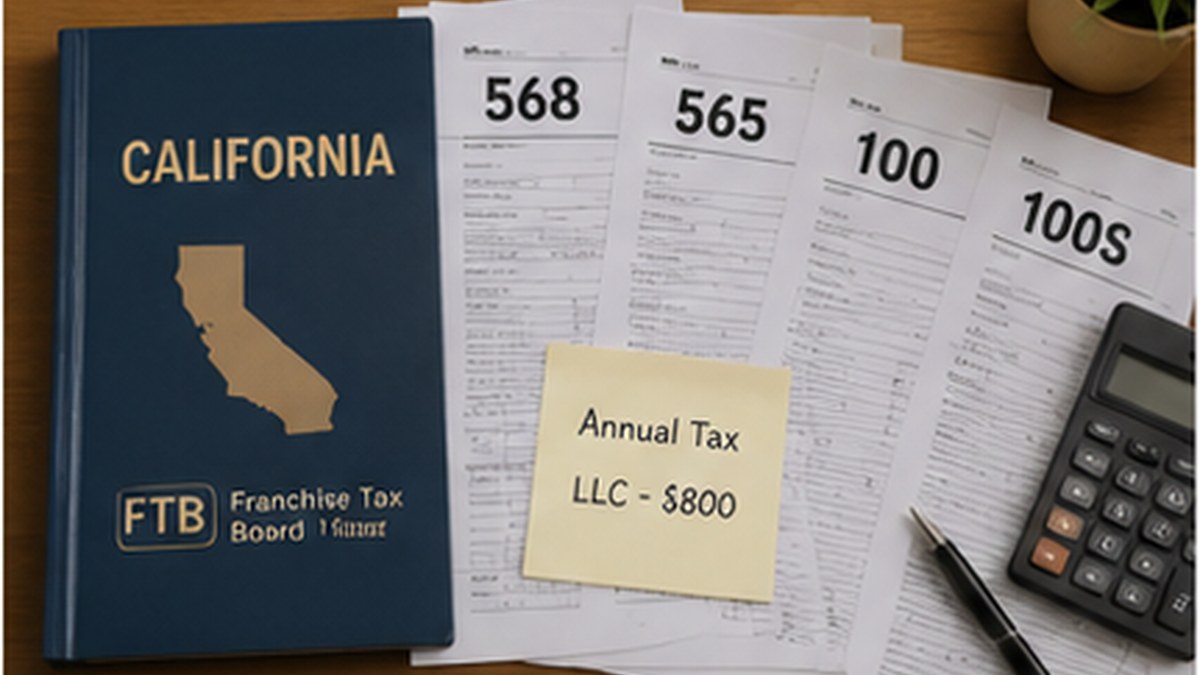
The Franchise Tax Board handles California income and franchise taxes. Your business type tells you which return belongs to you, and that is why checking the entity first matters. A sole proprietor generally reports the business through the owner’s California income tax return. Other business structures use their own state forms.
- A general partnership commonly uses Form 565.
- A California LLC commonly uses Form 568.
- A C corporation uses Form 100.
- An S corporation uses Form 100S.
- Putting the entity and form next to each other makes the filing path much easier to follow.
California LLC Tax
California LLCs have another number to watch: $800. An LLC that is organized, registered, or doing business in California generally pays an $800 annual tax. The payment is normally due by the 15th day of the fourth month after the tax year begins. FTB 3522 is used for the LLC annual tax payment.
A new owner may still hear that California waives the first $800 payment. That old rule should not be treated as a general 2026 exemption. The temporary first-year waiver covered earlier tax years and is no longer the normal rule for a new California LLC. A new LLC should therefore plan for the annual tax unless a specific exception applies.
Income can create another LLC charge once California annual income reaches $250,000. The fee starts at $900 and rises as California income moves into higher brackets. An LLC with $5 million or more in California income can face an $11,790 fee. This amount is separate from the $800 annual tax.
- The $800 is an annual LLC tax.
- The income-based amount is an LLC fee.
- One California LLC can owe both amounts.
- The amount of the LLC fee depends on California annual income.
California C Corporation Tax
A California C corporation normally pays tax at 8.84 percent of its California taxable income. California also has an $800 minimum franchise tax for corporations. A newly formed or newly qualified corporation gets special treatment in its first taxable year. Because of that rule, the minimum tax does not work exactly the same way in year one as it does later.
California S Corporation Tax
California taxes S corporation income at 1.5 percent in the usual case. The $800 minimum franchise tax also applies to S corporations after the first-year rule is taken into account. A newly formed or qualified S corporation does not pay that minimum tax for its first taxable year, but first-year net income can still be taxed at the 1.5 percent rate. That difference is important when comparing the first year with later tax years.
This is one reason the words “$800 California tax” can cause confusion. The amount appears in more than one part of the California tax system. An LLC annual tax and a corporation minimum franchise tax may share the same dollar amount, but the rules behind them are not identical.
5. File Sales Tax If You Sell Taxable Goods
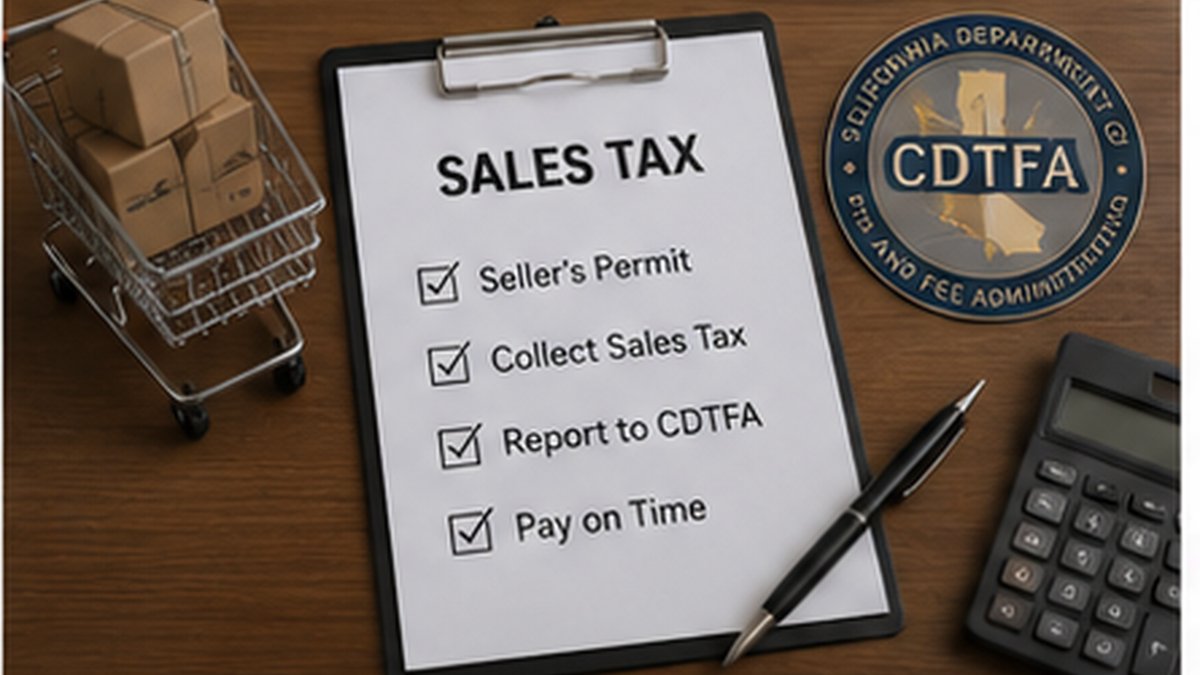
Income tax is based on business income, while sales tax follows taxable sales. If your California business sells taxable goods, you may need a seller’s permit and a sales and use tax account with the California Department of Tax and Fee Administration. Most people know the agency as CDTFA. That agency handles the sales tax side of the business rather than the income tax return.
California starts with a statewide sales and use tax rate of 7.25 percent. Local district taxes can push the final rate higher, so two California customers may not always pay the same total rate. The location of the sale can therefore affect the final tax collected from the customer.
- Picture a shop in California.
- A customer buys a taxable item.
- The business collects the correct sales tax.
- The sale goes into the store records.
- Later, the business reports those sales to CDTFA and sends the tax that is due.
- That is the basic trail from the sale to the tax return.
CDTFA can place a business on a monthly, quarterly, quarterly-prepayment, or yearly filing schedule. The schedule depends on the account and the amount of taxable sales or tax involved. Once CDTFA assigns the filing frequency, the business needs to follow those dates and report the sales for each filing period.
- Keep the records that explain the return.
- Taxable sales matter.
- Exempt sales matter.
- Refunds matter.
- Resale certificates matter.
- Purchases can matter too.
- Use tax may apply when the business buys an item for use in California and the seller did not collect the California tax that should have been paid.
Do not look at sales tax as a single number pulled from a bank account. The invoices, receipts, sales reports, resale certificates, and purchase records behind that number matter just as much. Those records explain where the reported sales and deductions came from if CDTFA later asks questions.
6. Handle Payroll Taxes If People Work for You
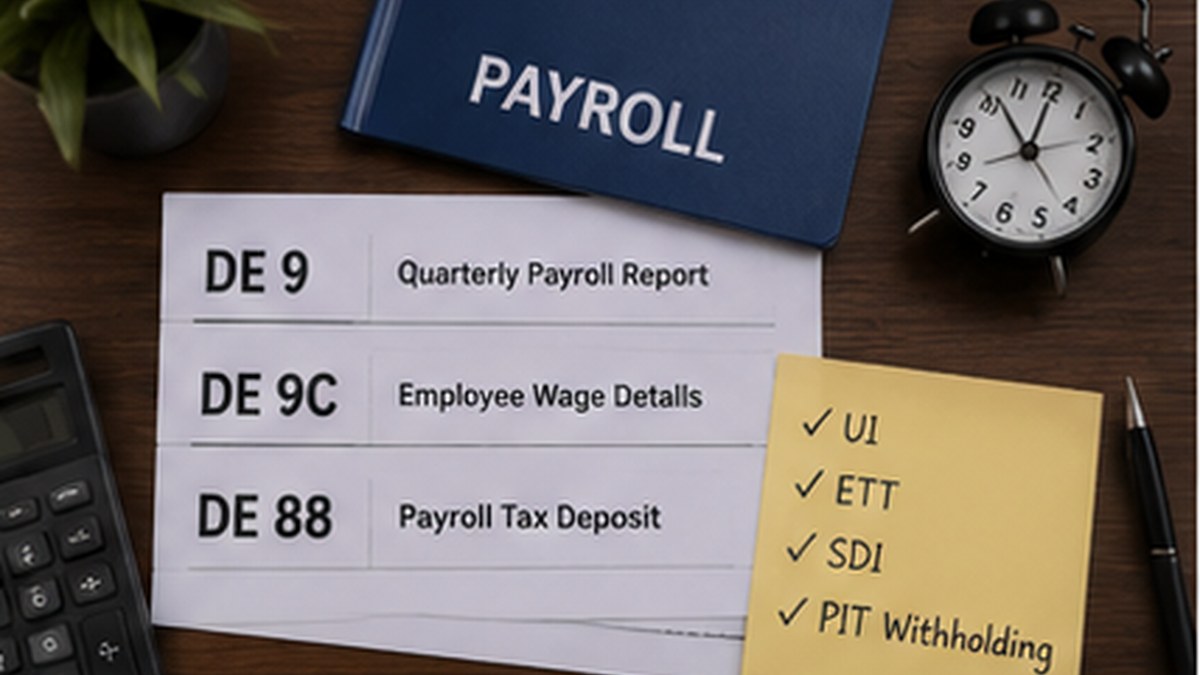
Hire an employee and another California agency enters the picture. EDD handles state payroll taxes and connects the business with several payroll programs. The system covers Unemployment Insurance, Employment Training Tax, State Disability Insurance, and California personal income tax withholding. Each part of payroll creates its own records and filing duties.
- Payroll forms each have their own job.
- DE 9 reports quarterly payroll information.
- DE 9C carries employee wage details.
- DE 88 is used for payroll tax deposits.
Think of those forms as pieces of the same payroll file. One shows the quarter, another shows the workers, and another handles the tax money being deposited. For 2026, a new California employer is generally assigned a 3.4 percent UI rate for its first two to three years. UI applies to the first $7,000 of taxable wages per employee.
The 2026 Employment Training Tax rate is 0.1 percent, also on the first $7,000 of taxable wages per employee. State Disability Insurance works differently. The 2026 SDI withholding rate is 1.3 percent, and California no longer places the old wage cap on SDI contributions. These payroll rates affect what gets withheld or paid as employees receive wages.
Keep payroll records where you can reach them. Employee names, gross wages, taxable wages, tax withheld, pay dates, and payroll deposits should agree with the forms sent to EDD. A payroll return is much easier to correct before it is filed than after the numbers stop matching.
7. Pay the Tax and Save the Proof
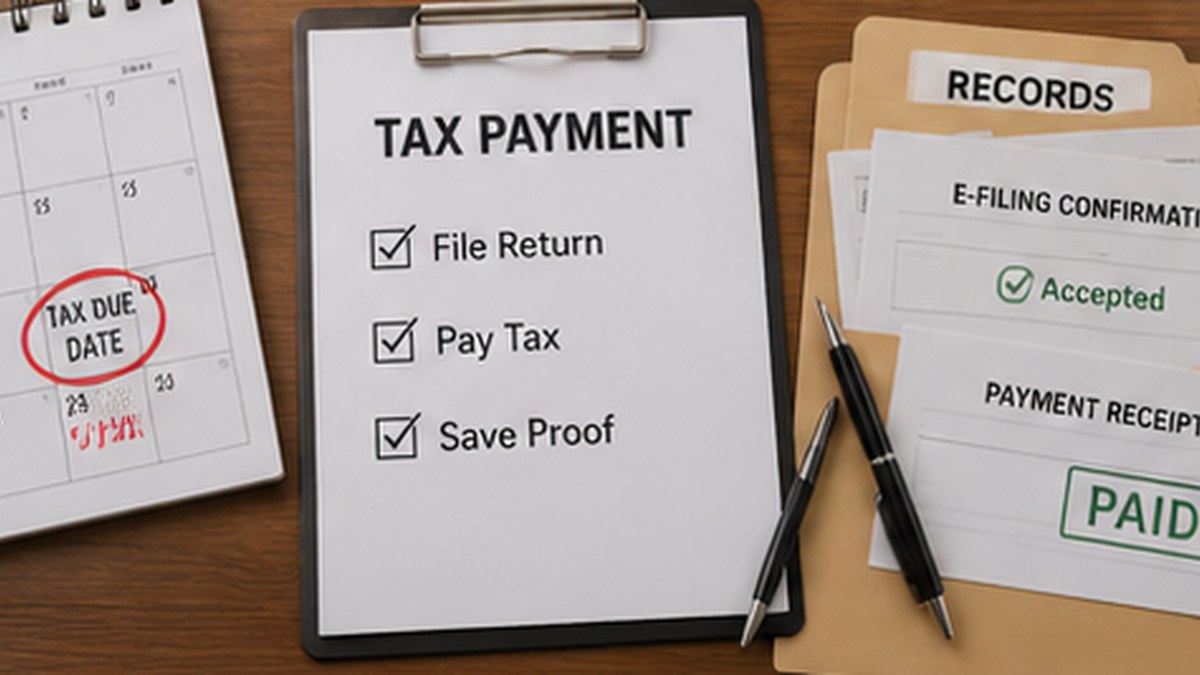
Filing a tax return and paying the tax are not always the same thing. A business can file a return that shows money due, and it can also make payments months before the final return is ready. The return reports the tax information, while the payment sends the money to the agency. Keeping those two actions separate makes deadlines easier to follow.
California LLCs are a good example. The $800 annual tax generally comes due during the tax year, not when Form 568 is finally filed. An LLC that owes the income-based fee may have another estimated payment to make during the year. That means one LLC can have more than one payment date before the annual return is finished.
- Sales tax has its own schedule.
- Payroll deposits have their own dates.
- Federal estimated taxes have theirs.
- This is where a simple tax calendar can save you trouble.
- Put the IRS dates on it.
- Add the FTB dates.
- Add CDTFA if you collect sales tax.
- Add EDD if you run payroll.
- Then keep proof after each filing or payment.
- Save the return itself, electronic filing confirmation, payment receipt, and bank record showing the payment cleared.
Those records can become very useful if an agency later says it did not receive a return or payment. Keep the confirmation with the same tax year and agency records. A clear file can show what was filed, when it was submitted, and when the payment left the business account.
What If My California Business Made No Profit?
A bad year does not automatically remove the filing duty. Your business can lose money and still have a return to file. A California LLC is a common example because the company may owe the $800 annual tax even when it has little income or finishes the year with a loss. The final profit number and the filing requirement are not always the same thing.
A corporation may still need to file its state return too. The tax bill may change when profit falls, but the filing duty can remain. That is why the business structure matters just as much as the amount of profit shown at the end of the year.
Does Every California Business Pay $800?
No. A sole proprietor does not owe the California LLC annual tax simply because the owner runs a business in the state. The $800 amount applies differently depending on the business structure. Matching the entity to the tax is the easiest way to avoid confusion.
- A general partnership has its own rules.
- A California LLC generally faces the $800 annual tax.
- Corporations have an $800 minimum franchise tax under their own rules, including special first-year treatment.
- The $800 amount does not apply to every California business in the same way.
- First identify the entity.
- Then match the tax to it.
Can I File California Business Taxes Online?
Yes. A lot of California business tax work can be done online. The IRS handles federal returns and payments, while the Franchise Tax Board handles California income and franchise tax accounts. CDTFA handles sales and use tax, and EDD handles payroll taxes.
- CDTFA handles sales and use tax accounts and returns.
- EDD handles payroll filings and payroll tax payments.
- A business may use two, three, or all four systems during the same year.
- The key is knowing which agency owns each tax.
- Once that part is clear, it becomes much harder to send the wrong form to the wrong place.
What If I Find a Mistake After Filing?
Fix the return where the mistake happened. A California corporation can amend a corporate return, while an LLC can correct Form 568. A partnership can amend its partnership return. Sales tax and payroll errors go back through the agencies that handle those taxes.
- Sales tax errors belong with CDTFA.
- Payroll errors go back through EDD.
- Start with the number that is wrong.
- Find the return where that number appeared.
- Correct that return and keep a copy of what changed.
There is no reason to change several unrelated returns because one number was wrong on one filing. Keeping the correction with the right form and agency makes the paper trail much easier to understand later.
What Is the Easiest Way to File Business Taxes in California?
Start with what the business actually does. Check how it is taxed, then pull together income and expense records. Prepare the federal return that belongs to the entity before moving to the California return. Once those pieces are in place, look at any extra filings created by sales or payroll.
- Do you sell taxable goods? CDTFA may need a return.
- Do employees work for you? EDD will likely be part of the file.
- Do you run a California LLC? Keep the $800 annual tax and Form 568 on your list.
- A one-person consultant may have only a few tax pieces to handle.
A California LLC with a shop, taxable sales, inventory, and employees leaves a much bigger tax trail. There may be an IRS return, an FTB return, sales tax filings, payroll reports, estimated payments, and records behind every one of them. Each business activity creates its own tax clue, form, agency, amount, or due date. Once those pieces are matched correctly, California business taxes become much easier to sort out.
- Online Services That Can Help Me File My CA Annual Report Easily September 1, 2026 - Home » How Do I File My Business Taxes in CaliforniaCalifornia Annual Report – 2026 Guide California does not really do an “annual report.” What you are actually filing is called the Statement of Information, and for an LLC it only comes around once every two years. Start your Business Trustpilot REGISTER YOUR LLC TODAY …
Online Services That Can Help Me File My CA Annual Report Easily Read More »
 Find a reliable registered agent in California for my LLC? August 31, 2026 - Home » How Do I File My Business Taxes in CaliforniaHow do I find a reliable registered agent in Californiafor my LLC? A non-US resident can start an LLC in the USA. You do not need to be a US citizen or live in the USA. You will usually need a registered agent and some …
Find a reliable registered agent in California for my LLC? Read More »
 LLC For Non-US-Residents August 22, 2026 - Home » How Do I File My Business Taxes in CaliforniaLLC for Non-US Residents In 2026 A non-US resident can start an LLC in the USA. You do not need to be a US citizen or live in the USA. You will usually need a registered agent and some basic business documents. Start your …