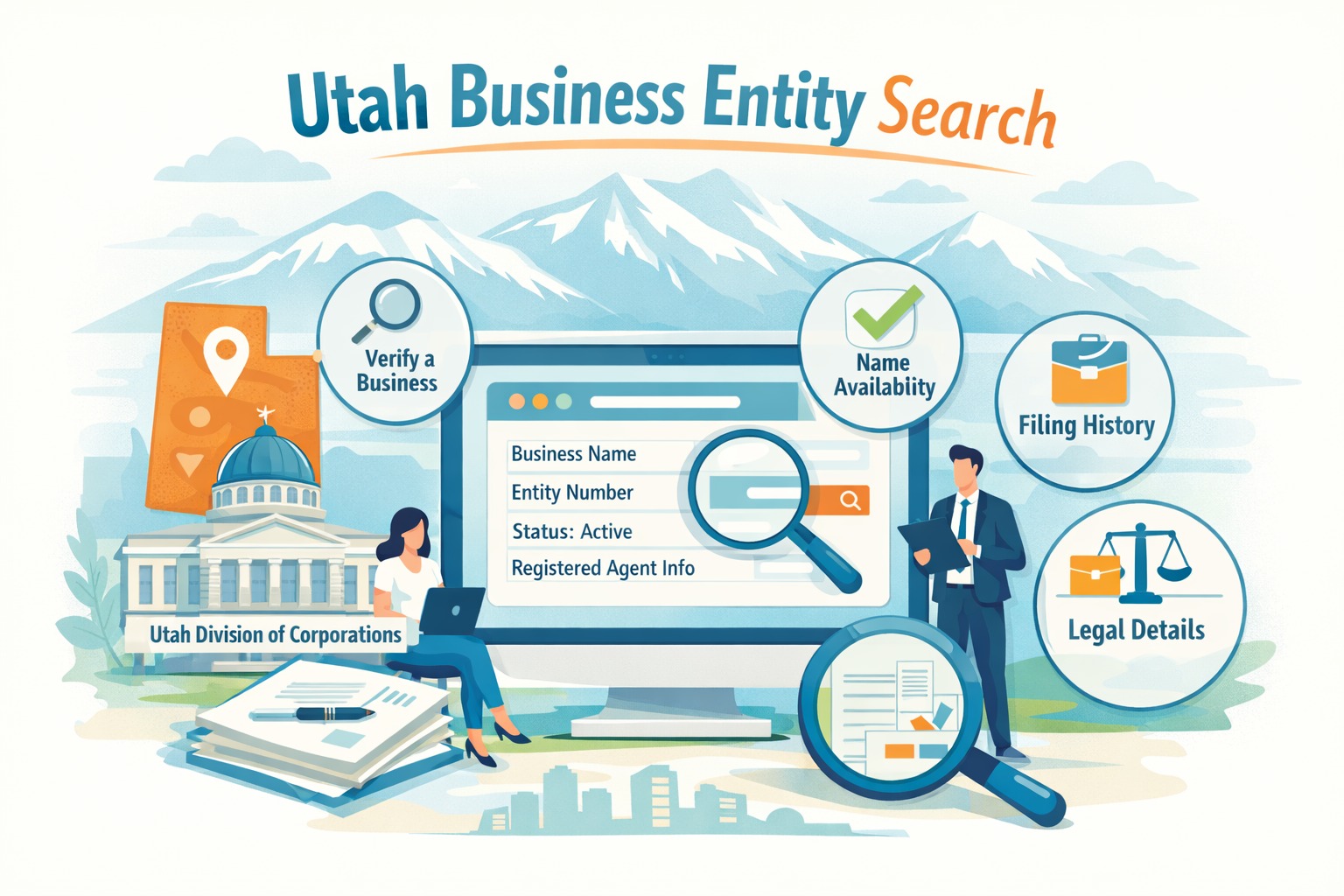
The search tool is managed by the Utah Division of Corporations and Commercial Code and provides access to official records such as business name, entity number, registration status, registered agent, and filing history. Entrepreneurs, investors, and legal professionals often use the Utah business entity search to verify a company’s legitimacy, check business name availability, and review important business registration details before starting or working with a company.
If you are planning to start a business in Utah, partner with a local company, or simply verify the legitimacy of a business, the Utah Business Entity Search is one of the most powerful tools available to you. Managed by the Utah Division of Corporations and Commercial Code (DCCC) which operates under the Utah Secretary of State this free online portal gives anyone access to official business registration data in just a few clicks.
In this guide, we will walk you through everything you need to know about Utah Business Search: what it is, why it matters, how to use it, and what information you can find.
How to Use Utah Business Entity Search: Step-by-Step
Using the State of Utah Business Entity Search portal is simple and straightforward. Here is how to do it:
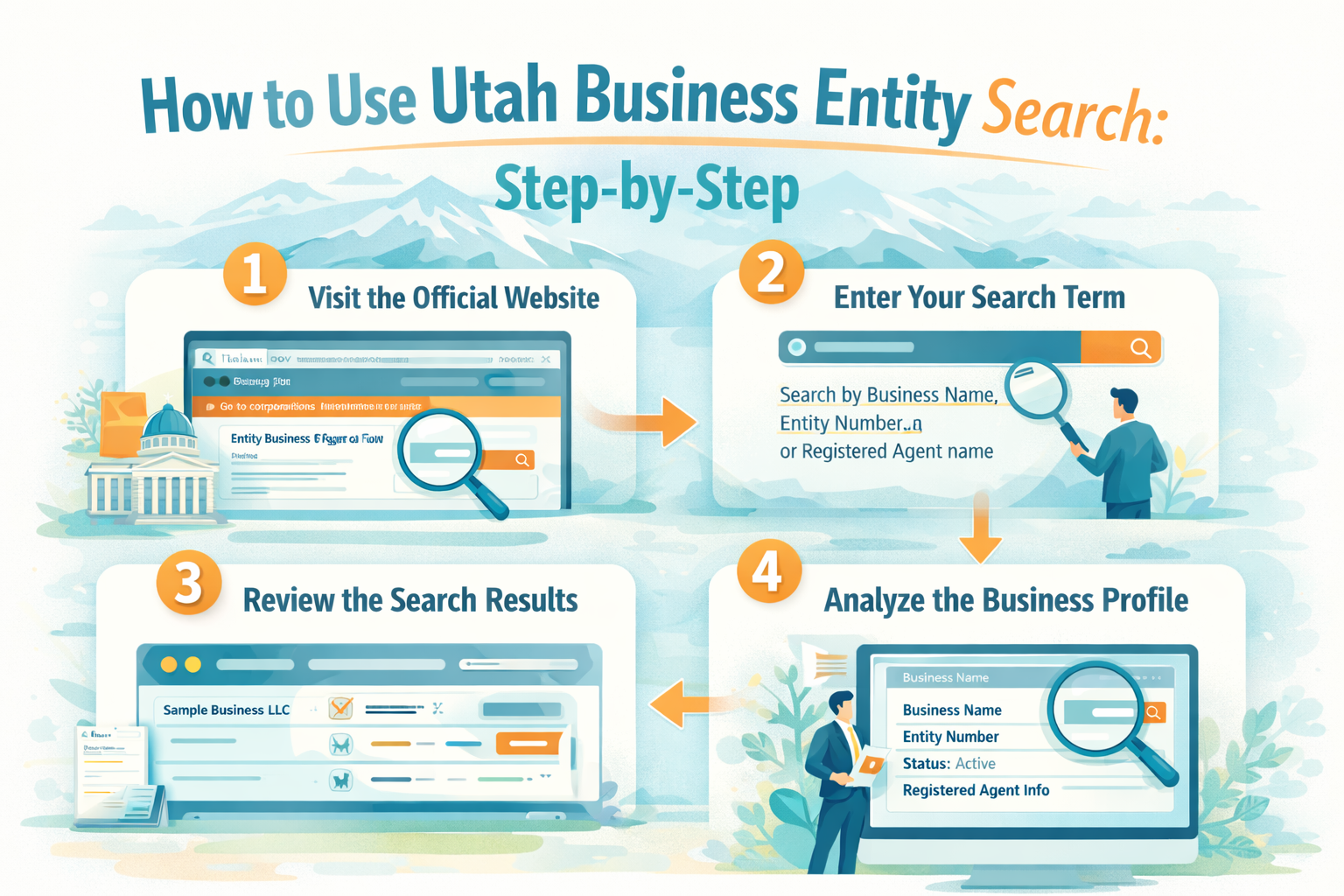
Step 1: Visit the Official Website
Go to the Utah Division of Corporations website at corporations.utah.gov and look for the “Business Entity Search” option on the homepage. This is the official portal for the Secretary of State Utah Business Entity Search.
Step 2: Enter Your Search Term
You can perform a Utah business lookup by Business Name, enter the full or partial name of the company. Entity Number If you have the official registration number, enter it directly. Registered Agent Name Search by the name of the registered agent.
Step 3: Review the Search Results
A list of matching businesses will appear from your Utah Business Search. Click on any business name to view its full profile.
Step 4: Analyze the Business Profile
Once you click on a business, you will see detailed information including registration status, type of entity, filing date, and more.
What Information Does Utah Business Entity Search Show?
When you find a business using the Utah Secretary of State Business Entity Search tool, here is the type of information you can typically expect to see:
Field | Description |
Entity Name | The official registered name of the business |
Entity Number | Unique ID assigned by the state |
Entity Type | LLC, Corp, LP, etc. |
Status | Active, Expired, Dissolved, Revoked |
Registration Date | Date the business was officially registered |
Expiration Date | When the registration needs to be renewed |
Registered Agent | Name and address of the registered agent |
Principal Address | Business’s official mailing or office address |
Filing History | List of documents filed with the state |
Understanding Business Status in Utah
One of the most important pieces of information in any Utah entity search result is the status of the business entity. Here is what each status means:
- Active: The business is in good standing and legally authorized to operate in Utah.
- Delinquent: The business has missed a required filing or fee and may face suspension.
- Expired: The business registration has lapsed and has not been renewed.
- Dissolved: The business has been officially closed and is no longer operating.
- Revoked: The state has revoked the business’s authorization to operate, often due to non-compliance.
Always make sure a business shows Active status before entering into any agreement with them. You can verify this instantly using the Business Lookup Utah tool.
Tips for Getting the Best Search Results
Searching by business name on the Utah State Business Entity Search portal can sometimes be tricky, especially if you do not know the exact registered name. Here are some tips:
- Use partial names: Instead of searching for the full name, try just the first word or two.
- Avoid abbreviations: Search for “Limited Liability Company” instead of “LLC” if the name search is not returning results.
- Check for alternate spellings: Businesses sometimes register under slightly different names than their trading name.
- Use wildcard searches”: The portal may support wildcard characters like * to broaden your Utah business lookup.
How to Register a Business in Utah After Your Search
Once you have confirmed your desired business name is available through the Utah Business Search, you can proceed with registration. Here is a brief overview of the process:
- Choose your business structure: Decide whether you want to form an LLC, corporation, or another entity type.
- File your formation documents: Submit Articles of Organization (for LLCs) or Articles of Incorporation (for corporations) through the Utah DCCC portal.
- Appoint a registered agent: Every Utah business must have a registered agent with a physical Utah address.
- Pay the filing fee: Filing fees vary by entity type. LLCs typically cost around $54 to file online.
- Obtain an EIN: After state registration, apply for a federal Employer Identification Number (EIN) from the IRS.
- Get necessary licenses and permits: Depending on your industry, you may need additional state or local licenses.
Frequently Asked Questions (FAQs)
What is Utah Business Entity Search?
Utah Business Entity Search is a free online tool provided by the Utah Department of Commerce that allows anyone to search for businesses registered in the state of Utah. It is also known as the Utah Secretary of State Business Search portal.
Is the Utah Business Lookup tool free?
Yes, the business lookup Utah tool is completely free to use. You do not need to create an account or pay any fees to search for business information.
What is the difference between Utah Business Entity Search and Utah Corporation Search?
The Utah Business Entity Search covers all types of business entities including LLCs, partnerships, and nonprofits. The Utah Corporation Search specifically focuses on corporations. However, both searches are conducted through the same portal.
Can I search for businesses from other states registered in Utah?
Yes. Foreign entities (businesses formed outside Utah but registered to operate in Utah) also appear in the State of Utah Business Entity Search database.
How current is the information in the database?
The Utah Secretary of State Business Entity Search database is updated regularly. However, there may be a short processing delay after new filings are submitted.
Can I download business records from the portal?
Yes, you can typically view and download filed documents, such as Articles of Organization or Annual Reports, directly from the business profile page after completing your Utah entity search.
What if I cannot find the business I am looking for?
If a business does not appear in the Secretary of State Utah Business Entity Search, it may not be registered in Utah, may be operating illegally, or may have been dissolved. In such cases, exercise caution before proceeding with any transaction.
Conclusion
The Utah Business Entity Search also known as the Utah Secretary of State Business Entity Search or State of Utah Business Entity Search is an essential tool for entrepreneurs, business owners, investors, attorneys, and anyone doing business in the state of Utah.
Whether you are performing a Utah business lookup to check name availability, running a Utah corporation search to verify a potential partner, or using the Utah entity search tool for legal due diligence, this free state-provided resource is your first and most reliable stop.
Start your Utah Business Search today at the official Utah Division of Corporations website and take full advantage of this powerful business transparency tool.
 Kansas Business Entity Search July 22, 2026 - Home » Utah Business Search in 2026 – Check Name AvailabilityKansas Business Entity Search 2026 Kansas business entity search is free at sos.ks.gov. Look up any LLC, check its status, and confirm name availability in under 3 minutes. No login needed. Fastest National Processing Times! REGISTER AN LLC Trustpilot Business Name Availability Check State of …
 Wisconsin Business Entity Search July 15, 2026 - Home » Utah Business Search in 2026 – Check Name AvailabilityWisconsin Business Entity Search 2026 The Wisconsin business entity search is a free official tool by the Department of Financial Institutions (DFI) to find LLCs, corporations, and name records. You can search by business name or entity ID to check registration status, filing history, and …
 South Carolina Secretary of State | Business Entity Search July 7, 2026 - Home » Utah Business Search in 2026 – Check Name AvailabilitySouth Carolina Business Entity Search SC Secretary of State: South Carolina business entity search online. Find South Carolina businesses, filing info & more with the official SC entity search. Fastest National Processing Times! REGISTER AN LLC Trustpilot Business Name Availability Check State of South Carolina …
South Carolina Secretary of State | Business Entity Search Read More »